01
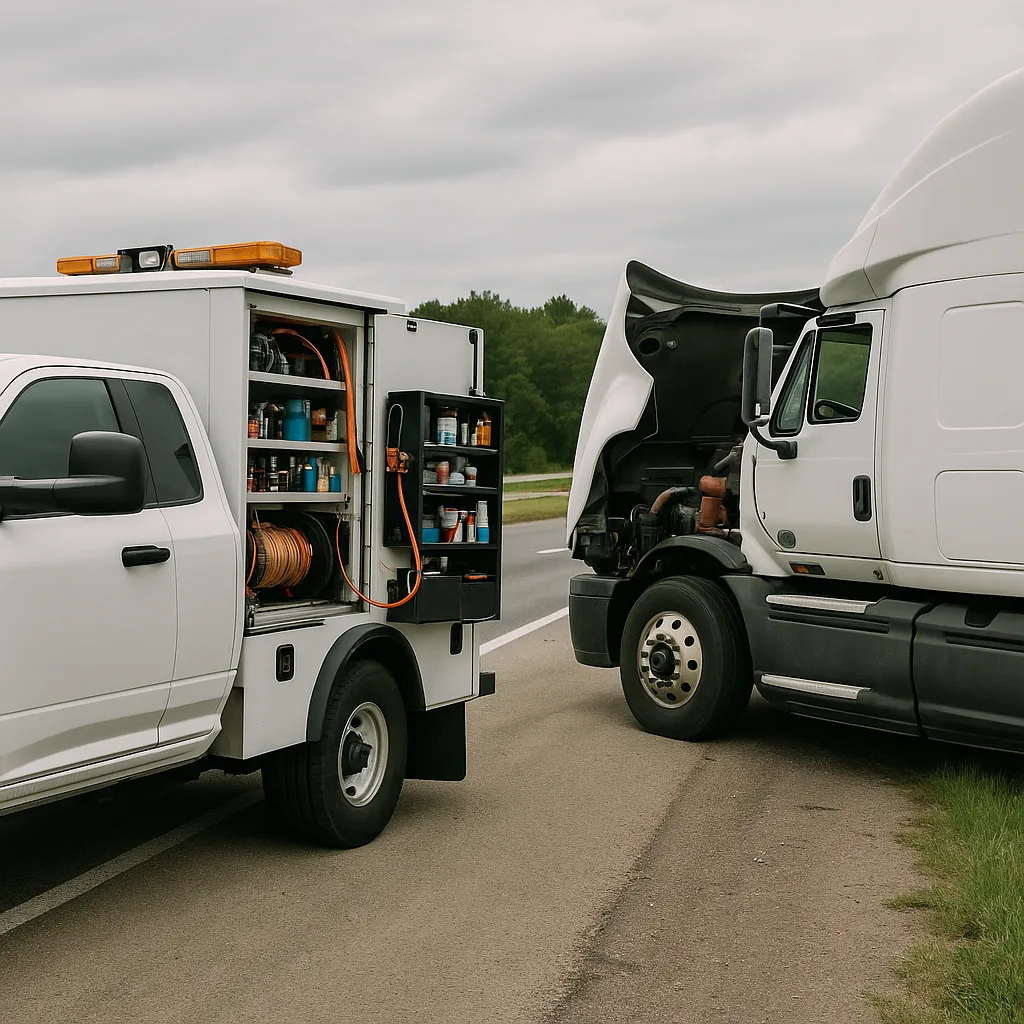
Mobile PM service truck
Bulk oil, filters, lubricants, air and electrical tooling, and lighting for overnight work
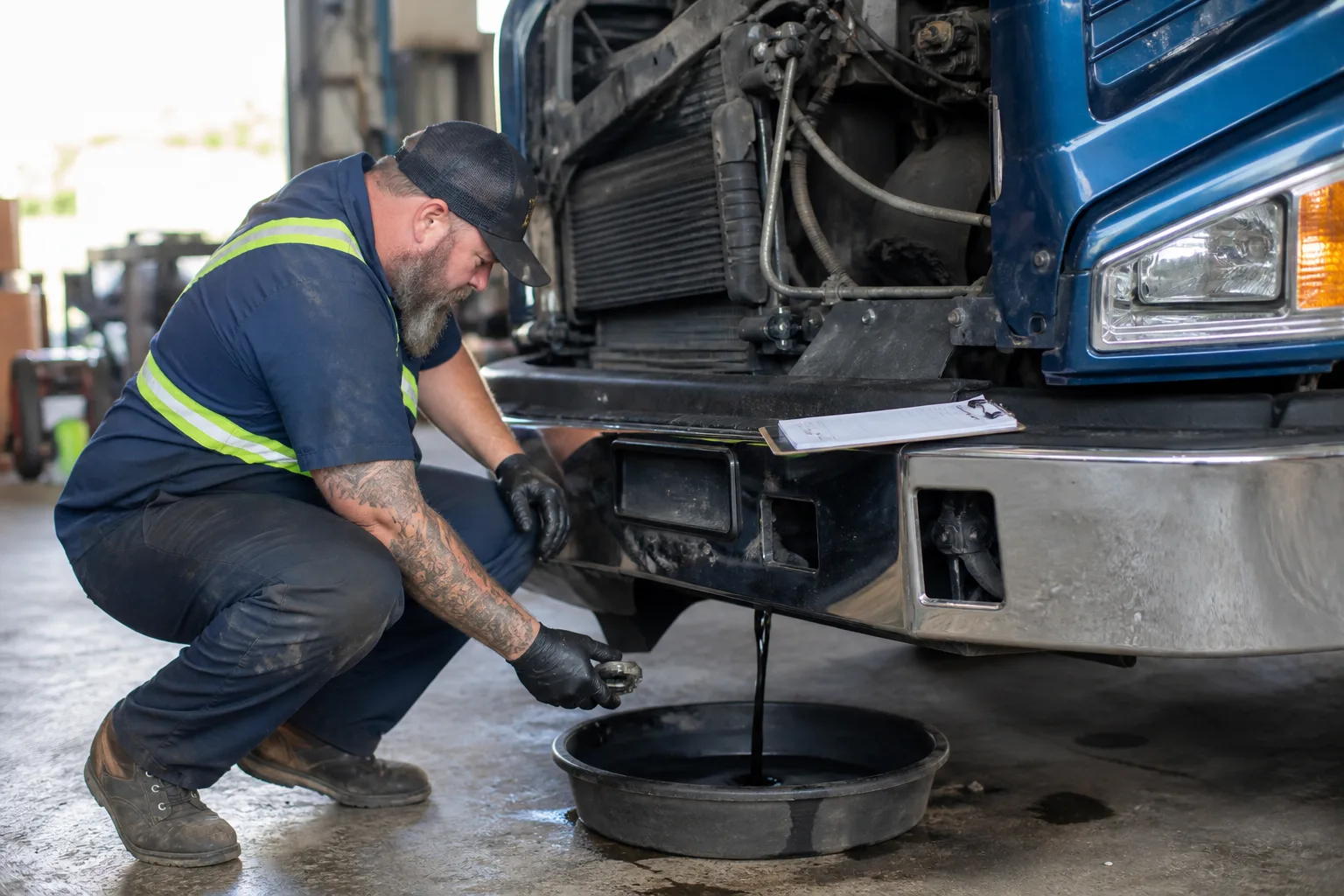
Scheduled A and B services performed at your yard on your parking cycle.
Running trucks out of St. Paul? We service them at your yard on your parking cycle and keep the records properly — so a roadside breakdown and a compliance audit both stop being surprises. The same trucks cover Minneapolis, Bloomington, and Roseville, so a call from outside town reaches the same people.
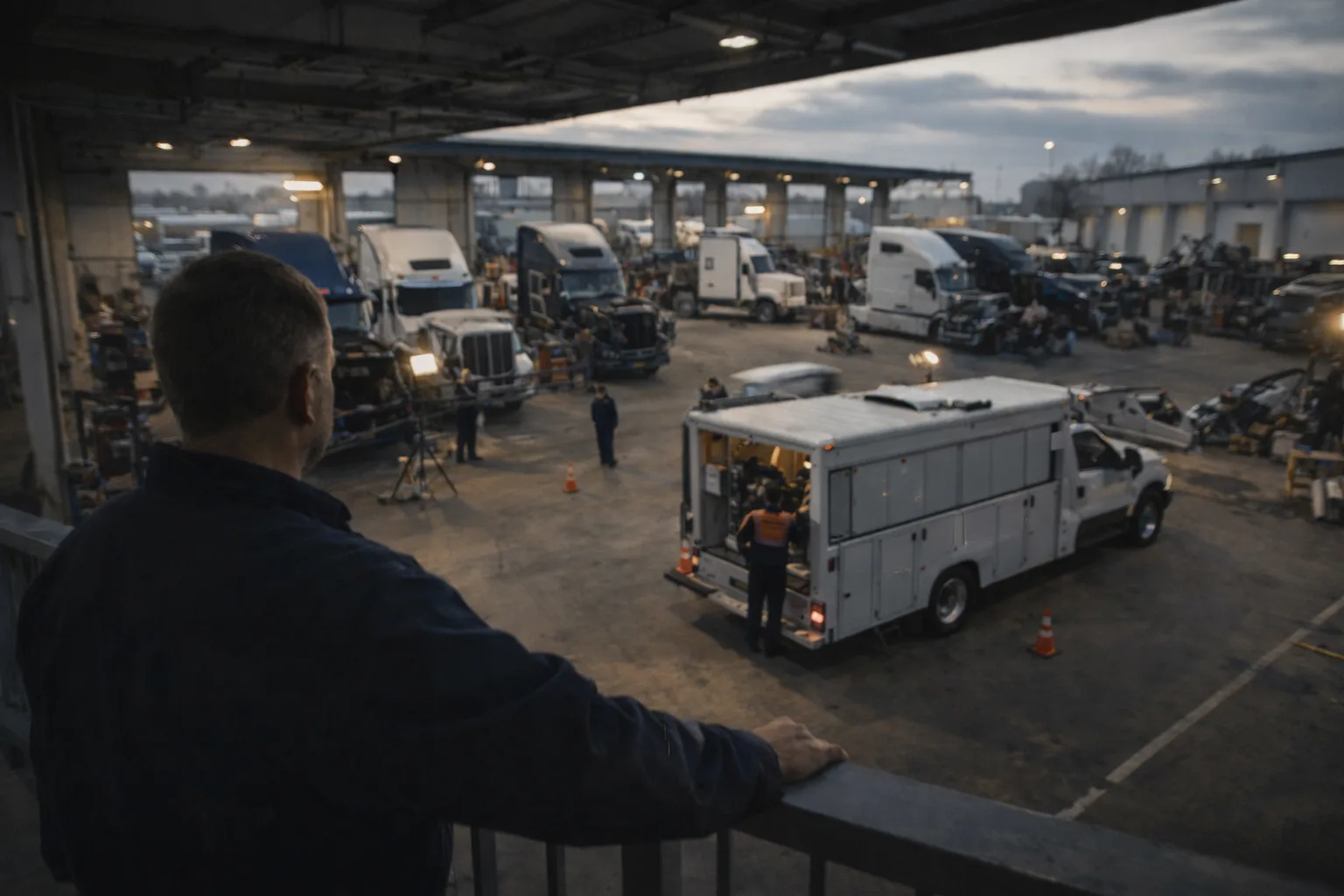
Fleet maintenance is delivered by service trucks and technicians rather than by a single class of equipment. What matters for a St. Paul program is whether the unit that arrives can complete the service on your lot instead of scheduling a second visit.
Bulk oil, filters, lubricants, air and electrical tooling, and lighting for overnight work
Scheduled A and B services performed at your yard on your parking cycle.
Bulk fluid delivery with metering and used-oil recovery
Multi-unit service days where handling drums per truck would be the bottleneck.
Manufacturer-level ECM software for engine, chassis, aftertreatment, and ABS
PM services on late-model equipment where a fault code needs reading, not guessing.
Air system tooling, drum and rotor service capability, qualified brake inspector on board
B and C services, annual inspections, and any brake defect certification.
Commercial tire changing, balancing, torque, and casing evaluation
Tire program work batched into a PM day rather than run as separate visits.
Qualified inspector, inspection documentation, and decal issuance
The 396.17 annual, scheduled ahead of expiry instead of after a roadside stop finds it.
One call puts a fleet maintenance unit on the road to you anywhere in St. Paul and the surrounding Ramsey County. Tell us where you are stopped and we do the rest.
A scheduled program run against intervals and records, not a phone number you call after something breaks. The point of a St. Paul PM contract is that the roadside call never happens — and that when a DOT officer asks for the file, it exists.
The short-interval service — lube, oil and filters, fluid levels, tire pressures and tread, lights, and a walkaround. Most St. Paul fleets run this every 10,000 to 25,000 miles depending on duty cycle, and it is where developing faults get caught cheaply.
Everything in the A service plus brake measurement, slack adjuster travel, air system checks, driveline inspection, and steering and suspension. The service that keeps a St. Paul truck out of the out-of-service category, since brakes drive more OOS violations than any other system.
Coolant and DEF quality testing, differential and transmission service, air dryer cartridge, fuel filters, and the deeper inspection items. Timed to the manufacturer's schedule rather than convenience, because a skipped St. Paul C service shows up as a failure two intervals later.
The 49 CFR 396.17 annual inspection, performed by a qualified inspector and documented on the vehicle. Every commercial vehicle in your St. Paul fleet needs one every twelve months, and the decal or the paperwork must be available on demand.
Rotation, matching, pressure discipline, tread depth tracking, and pull-point decisions made before a casing is scrapped. Tires are usually the second-largest maintenance line in a St. Paul fleet after fuel-related work, and most of that spend is controllable.
Pre-winter and pre-summer passes — batteries and charging under load, coolant protection, air dryer and moisture, block heaters, and DEF handling. In St. Paul the first hard freeze produces a cluster of failures that a September battery test would have prevented.
Driver vehicle inspection reports collected, defects repaired or certified as not needing repair, and the certification signed before the vehicle goes back out. A St. Paul DVIR with an open defect and no repair record is a violation whether or not the truck was safe.
A record per vehicle identifying the unit, listing every inspection, repair, and service performed with dates and mileage. Federal rules require these be kept while the vehicle is under your control and for six months after — the file, not the memory, is what gets audited in St. Paul.
Brake work performed and documented by someone meeting the federal brake inspector qualification standard. This is one of the most commonly missed requirements in a St. Paul audit, because the work was done correctly by someone whose qualification was never recorded.
Watching the roadside inspection violations that feed your maintenance score, and fixing the pattern rather than the ticket. A St. Paul carrier with a rising Vehicle Maintenance BASIC gets inspected more often, which produces more violations — the loop closes on itself.
A truck placed out of service at a St. Paul scale or roadside needs repair before it moves, documentation of that repair, and the violation certified and returned. Handling this badly turns a one-truck problem into an audit finding.
Pulling the maintenance side of a compliance review into one package — annual inspections, DVIRs, repair orders, inspector qualifications. The St. Paul fleets that fail this part rarely failed the maintenance; they failed the paperwork that proves it.
Maintenance cost per mile by unit, so the truck that is quietly consuming the budget becomes visible. Most St. Paul fleets can name their fuel cost per mile instantly and cannot name their maintenance cost per mile at all.
The point where accumulated repair spend on a St. Paul unit passes what a replacement would cost to run. Making this call on data rather than on the last invoice is where a fleet program pays for itself.
Tracking hours out of service and cause, separating scheduled downtime from breakdown downtime. A St. Paul fleet with rising unscheduled downtime has a PM interval problem, not a luck problem.
Catching work that belongs to a manufacturer warranty or an open recall before you pay for it. Missed warranty claims are one of the few pure-refund line items in a St. Paul maintenance budget.
Common filters, pads, lamps, and fluids across the St. Paul fleet so that stocking is possible and a roadside repair does not wait on a part nobody carries.
Every unscheduled St. Paul road call reviewed against the PM record — was the interval wrong, was the item on the checklist, or did somebody sign for an inspection that did not happen. This is the loop that makes a program improve instead of merely repeat.
Technicians and a service truck to your St. Paul lot, working units while they sit. For fleets that park overnight, this converts maintenance downtime into hours the trucks were not earning anyway.
PM scheduled against your dispatch calendar rather than shop hours. A St. Paul truck serviced Saturday is a truck that never missed a load.
Units serviced where they actually sit — a terminal, a customer yard, a truck stop on the lane — for fleets whose trucks rarely come home to St. Paul.
Alignments, major driveline, frame and body work, and anything needing a lift go to a shop. A St. Paul program that pretends everything is mobile produces bad work at the roadside.
When something does break, the St. Paul response is by the operator who holds your maintenance file and knows the unit, not a stranger reading a VIN over the phone.
Tractors, trailers, straight trucks, and light service vehicles under one St. Paul schedule. Most fleets are mixed, and splitting them across vendors is how intervals get missed.
Fleet maintenance is not priced like a road call. A St. Paul program is quoted per unit against a written scope — which services, at which intervals, on which equipment — so the honest answer to "what does it cost" is a description of the structure and the variables, not a single number. Below is what actually moves a quote.
Per-unit cost falls as unit count rises, because a service day amortizes travel across every truck on the lot. A mixed fleet of tractors, trailers, and light vehicles prices per class rather than as one blended rate.
An A-service-only program and a full A/B/C program with annual inspections are different products. Shortening intervals raises the program cost and usually lowers total maintenance cost — that trade is the whole decision.
Service at your yard on your parking cycle prices differently than service scattered across locations or performed on-route. Concentration is the single biggest lever a fleet controls.
Overnight and weekend windows carry a premium and frequently pay for themselves, because a truck serviced outside dispatch hours never left the revenue schedule.
A five-year-old vocational truck in stop-and-go service consumes more PM than a two-year-old highway tractor at the same mileage. Duty cycle predicts cost better than odometer reading.
OEM versus quality aftermarket, and extended-drain versus conventional oil, change both the invoice and the interval. The cheaper filter on a longer interval is sometimes the more expensive choice.
Annual federal inspections, DVIR handling, brake inspector documentation, and maintenance file assembly can be inside the program or billed as performed. Inside is usually cheaper and always more complete.
Programs that include emergency response price higher per unit and lower per incident. Fleets with thin spare capacity generally find the attached coverage cheaper than paying road calls at retail.
Programs are quoted per unit against a written scope. We do not publish a per-truck rate because a rate quoted without the scope beside it is not comparable to anything — including our competitors' numbers.

The same crews that run St. Paul also cover Minneapolis (8 mi), Bloomington (12 mi) and Roseville (10 mi), so a call from either side of Ramsey County reaches the same desk.
Each service links to local response times, rescuer coverage, and recent dispatched jobs in this metro.
Patterns observed across recent dispatch data in this metro, by service type and corridor.
February 0600, I-494 eastbound approaching the airport split: light snow overnight turned to glazed ice. A loaded flatbed with 3M equipment hits the ice, trailer breaks loose, blocks all lanes. RRN dispatches heavy-duty tow to the nearest exit (Nicollette Avenue) while traffic backs up 4 miles. Road Rescue coordinates with Minnesota State Patrol for lane closure and works the recovery while secondary breakdowns spike across the network.
June midday, US 52 southbound near downtown: refrigerated trailer (frozen foods, dairy) loses compressor drive belt. Temperature climb inside unit threatens $40K cargo. RRN mobile tech reaches the breakdown in 22 minutes with spare belt inventory from Blaine Brothers. Repair takes 18 minutes. Driver continues to distribution center in Lakeville without spoilage loss.
October 1700, I-35E northbound in downtown St. Paul: tandem tractor runs loss of air brakes while merging from 35E to I-94 eastbound interchange. Driver safely pulls onto shoulder. RRN arrives 12 minutes later, diagnoses failed compressor, sources replacement from Universal Truck Parts (Roseville), and completes air brake service roadside in 45 minutes.
April morning, I-494 near Murphy Logistics Fridley facility: heavy goods carrier develops sidewall damage on drive axle tire. Driver limps to nearby exit. RRN mobile tire service arrives with load-rated tire inventory, changes all drive axle tires on-site in 35 minutes. Load continues to warehouse without downtime.
May afternoon, Stone Arch Bridge crossing on US 52: cement truck develops hydraulic line rupture crossing the Mississippi. Driver pulls to designated shoulder. RRN hydraulic specialist arrives in 28 minutes, sections failed hose, installs backup line rated for next segment. Truck clears bridge within 55 minutes to prevent rush-hour cascade failure.
November 0400, I-494 westbound near airport: Amazon freight unit reports engine knock, suspects mechanical timing issue. RRN engine diagnostics unit arrives in 19 minutes, runs full scan, identifies valve wear. Quick valve adjustment restores operation for remaining segment to regional hub. Peak-season delivery timeline maintained.
The federal maintenance rules are the ones that decide a Minnesota audit, and they are about records as much as wrenches. A St. Paul fleet can be maintained impeccably and still fail a compliance review because the file does not prove it.
Every motor carrier must systematically inspect, repair, and maintain all vehicles under its control. The word doing the work is systematic: an unwritten schedule and a good mechanic do not satisfy it. Carriers must also keep a record for each vehicle identifying it, listing the inspections and maintenance performed with dates, and retain that record for the period the vehicle is controlled plus six months afterward.
Drivers must report defects at the end of each driving day on any vehicle where a defect exists. The carrier must repair any defect affecting safe operation before the vehicle is dispatched again, and must certify on the report that the repair was made or that no repair was needed. An open defect with no certified response is a violation independent of whether the vehicle was actually unsafe.
Each commercial vehicle must pass a comprehensive inspection at least every twelve months, performed by a qualified inspector against the minimum standards in Appendix A. Proof travels with the vehicle — a decal or the inspection report — and must be produced on demand. Roadside inspections performed to the same standard can satisfy the requirement, which is worth knowing before paying for a duplicate.
Annual inspections must be performed by an inspector meeting defined training and experience requirements, and brake work by someone meeting the brake inspector standard. The carrier must retain evidence of those qualifications. This is one of the most commonly missed items in a maintenance audit, because the work itself was competent and the qualification record was never created.
Roadside inspection violations feed the Vehicle Maintenance BASIC in the federal Safety Measurement System, weighted by severity and how recent they are. A score above the intervention threshold raises inspection frequency, which produces more violations, which raises the score. Lights, brakes, and tires generate the bulk of these — and all three are PM checklist items.
Roadside inspectors apply the North American Standard out-of-service criteria, which define the defect thresholds that stop a vehicle where it sits rather than generating a citation. Brake defects dominate. The practical consequence for a fleet is that the threshold is published — a PM program can inspect to it deliberately instead of hoping.
In a compliance review the maintenance file is the evidence. Annual inspection reports, DVIRs with certified repairs, repair orders tied to units, and inspector qualification records are what an investigator reads. Well-maintained trucks with no file look identical, on paper, to neglected ones.
You get a real time before anyone rolls, and the price before the work starts. No motor club runaround and no waiting on a callback.
St. Paul's freight movement follows I-94, I-35E, and I-494, with additional capacity on US 52 and US 61. Major employers like 3M (medical devices, electronics), General Mills (consumer packaged goods), U.S. Bancorp, Target logistics, and Best Buy distribution generate constant heavy-truck traffic. Weather patterns—deep freeze in winter, black ice on bridge approaches, occasional summer thunderstorms—create predictable breakdown windows. A single mechanical failure or weather incident on I-494 eastbound backing up to the airport affects retail distribution, medical supply chain, and regional trucking for hours.
Saint Paul is the capital city of the U.S. state of Minnesota and the county seat of Ramsey County. As of the 2020 census, the city had a population of 311,527, making it Minnesota's second-most populous city and the 69th-most populous in the United States. Saint Paul and neighboring Minneapolis form the core of the Twin Cities metropolitan area, the third most populous in the Midwest with around 3.7 million residents.
St. Paul sits at the heart of Minnesota's freight corridor where I-94, I-35E, and I-494 converge—the backbone of Midwest distribution. As the state capital and second-most populous city in Minnesota, St. Paul handles everything from 3M healthcare logistics to General Mills consumer goods, with daily heavy traffic crossing the Mississippi River bridges and funneling south through the Blaine Brothers Distribution hub. A breakdown on I-94 eastbound through downtown doesn't just strand one driver; it cascades across the Twin Cities network within minutes.
Winter here is relentless. November through March brings black ice on I-494's eastbound climb toward the airport, and St. Paul's crosstown routes (I-35E, US 52) become slick corridors where lightweight trailers jackknife. The 2020 census recorded 311,527 residents within city limits, but the metro area swells to 3.7 million—making congestion, weather shutdowns, and accident response times critical. Murphy Logistics runs major distribution out of both St. Paul and Fridley; when a Reefer unit breaks down on a temperature swing, you're racing against spoilage across a three-state supply chain.
RRN covers St. Paul's freight ecosystem 24/7: Blaine Brothers Parts in downtown St. Paul connects directly to repair vendors; truck stops at Pilot (Inver Grove Heights), Flying J (Northfield), and TA centers (Hudson, Rogers) feed demand into our vendor network. We staff for the predictable—mechanical breakdowns on cross-town gridlock—and the unexpected: winter pile-ups on the I-94/I-35E interchange, chemical haul incidents on US 52, and high-speed recovery near the airport corridor where Federal Express and Amazon Air operations run continuous freight.
Fleet maintenance services are a scheduled program that keeps a company's vehicles serviced, inspected, documented, and legal — as opposed to a repair shop you call after something fails. A real program in St. Paul has four parts. First, preventive service at defined intervals: oil and filters, brakes, tires, fluids, and inspection items, usually tiered as A, B, and C services with the deeper work at longer intervals. Second, federal compliance work: the annual 396.17 inspection on every commercial unit, driver vehicle inspection reports collected and defects certified as repaired, and brake work documented by a qualified inspector. Third, records — a maintenance file per vehicle, because in an audit the file is the evidence and a well-maintained truck with no paperwork looks the same as a neglected one. Fourth, the repair work the program generates, done at your yard where possible. What separates a program from a vendor relationship is that it is scheduled and measured: cost per mile, unscheduled downtime, and roadside call frequency should all be moving in the right direction, and if they are not, the intervals are wrong.
Day to day it is three streams of work running at once. The scheduled stream is PM services coming due by mileage, hours, or calendar — lube and filters, brake measurement and adjustment, tire rotation and pressure, air system checks, coolant and DEF testing, and the annual federal inspection. The reactive stream is defects: whatever drivers report on their DVIRs, whatever a technician finds during a PM, and whatever fails between services. The administrative stream is the one fleets underestimate — certifying DVIR repairs, filing repair orders against the right unit, tracking annual inspection expiries, keeping inspector qualification records, and watching the Vehicle Maintenance BASIC for the violation pattern that is quietly raising your inspection frequency. In a St. Paul operation the scheduled stream should be the largest of the three. When the reactive stream grows past it, the program is not preventing anything — it is just paying for breakdowns on a slower schedule.
They overlap and they are not the same thing, which matters when you compare quotes. Fleet maintenance is the physical and regulatory upkeep of the vehicles: services, repairs, inspections, and the maintenance records behind them. Fleet management is the broader commercial function — acquisition and disposal, financing and leasing, fuel programs, telematics and driver behavior, licensing and registration, insurance, and total cost of ownership analysis across the fleet. A large fleet management company will typically include maintenance inside its offering and price the whole bundle per unit per month. A maintenance provider does the upkeep and hands you the data. Which you want depends on where your gap is: if your trucks are serviced but you cannot say what a unit costs per mile, you have a management problem, and if you can produce a spreadsheet but not an annual inspection report, you have a maintenance problem. Buying the wrong one is common and expensive.
Almost always per unit per month, and the number is meaningless without the scope beside it. The structures you will encounter are a flat per-vehicle monthly fee covering a defined service list, a per-vehicle management fee with maintenance billed as performed, a cost-per-mile arrangement on defined equipment, or a full-service lease where maintenance is bundled into the lease payment. What moves the figure is fleet size, vehicle class and age, duty cycle, the service intervals you choose, whether annual inspections and compliance recordkeeping are included, and whether roadside response is attached. When comparing vendors, force the comparison onto the same footing: ask each one for the written scope — which services, at which intervals, on which equipment, with what included — because a lower per-unit price with A services only and compliance billed separately is not cheaper than a higher price with the whole program inside it. It just looks cheaper on the first page.
Follow the manufacturer's schedule as the floor, then shorten it for duty cycle. A highway tractor running long steady miles may go 25,000 miles or more between A services on extended-drain oil, while the same engine in St. Paul stop-and-go work — port drayage, city delivery, vocational service — accumulates engine hours and brake cycles far faster than the odometer suggests and needs a shorter interval. That is why hours or fuel burn is often a better trigger than mileage for an urban fleet. Two dates are fixed regardless of how you set intervals: the federal annual inspection every twelve months on every commercial vehicle, and any state periodic inspection your registration requires, which runs alongside the federal one rather than replacing it. The practical test of whether your intervals are right is your own data — if unscheduled road calls and downtime are rising while PM spend is flat, the interval is too long, and the road calls are already paying the difference.
Often more worth it than for a large one, because a small fleet has no spare capacity. When a ten-truck operation puts one unit out of service, it has lost ten percent of its revenue capability for the day; a two-hundred-truck fleet reassigns the load and moves on. The federal obligations are also identical regardless of size — a three-truck carrier owes the same systematic maintenance, annual inspections, DVIR handling, and records that a national fleet does, and small carriers fail compliance reviews on paperwork far more often than on mechanical condition. Where the math genuinely changes is per-unit cost: a small fleet cannot amortize a service visit across many trucks, so per-unit pricing is higher. The honest comparison is not program cost against zero, it is program cost against what you currently spend on unscheduled repairs, road calls, and downtime — numbers most small fleets have never added up. When they do, the program is frequently already being paid for, just at retail and at the worst possible moment.
Black ice on the eastbound climb toward the airport (MP 48-52) is the primary concern November through March. Lightweight trailers and loaded tandems both struggle on the glazed sections. RRN stations heavy-duty tow capacity strategically to respond within 28 minutes to I-494 corridor calls. Air brake and engine warm-up time are also critical; we carry spare glow plugs and heating line fittings for cold-start failures.
US 52 runs congested through downtown St. Paul, especially during rush (0700-0900 and 1600-1800). RRN mobile units stage near downtown exits and can reach most breakdowns in 22-28 minutes. Traffic congestion is factored into our dispatch algorithm; we route heavy recovery via backroads (Stone Arch Bridge, Fort Road) to minimize additional delays.
Yes. Murphy Logistics (Fridley and St. Paul facilities) moves significant refrigerated loads. RRN partners with specialized refrigeration shops and carries common compressor, condenser, and insulation repair materials. Reefer breakdowns near the I-494/Murphy hub typically resolve in 38-42 minutes, protecting temperature-sensitive goods.
Fuel delivery to stranded trucks on I-494 eastbound is coordinated with Minnesota State Patrol and airport authorities due to hazmat regulations. RRN dispatches fuel units with proper credentials to designated safe zones off the main lanes. Standard fuel calls respond in 24-28 minutes; hazmat coordination may add 8-12 minutes but ensures legal and safe delivery.
St. Paul's winter weather (heavy snow, black ice, wind) creates multi-vehicle incidents on I-94 and I-494 intersections. RRN coordinates with Minnesota State Patrol, pre-stages additional heavy-duty tow and winch recovery units on forecast high-risk days, and provides real-time dispatch updates to freight carriers. Response to pile-up scenes typically takes 18-32 minutes depending on severity and access.
Yes. Universal Truck Parts (Roseville), Blaine Brothers Parts Distribution (downtown St. Paul), and FleetPride (Roseville) are RRN-integrated suppliers. Manders Diesel (Lakeville) serves southern corridor calls. Most common replacement parts (belts, hoses, brake pads, filters) are in stock for 20-30 minute mobile repair windows; rare parts are sourced same-day via overnight courier.
RRN-certified DOT inspectors operate from staging points across the Twin Cities metro. For St. Paul area calls, inspection arrival is typically 38-45 minutes. Pre-scheduled inspections at warehouse or truck stop facilities can often be completed in under 30 minutes. We coordinate with General Mills, Target, and 3M distribution for regular fleet maintenance windows.
Yes. Amazon Air operations near the Minneapolis-St. Paul airport run 24/7 freight schedules. RRN provides priority engine diagnostics, brake system checks, and rapid reefer repairs to keep Amazon units mobile. We maintain a dedicated dispatch tier for airport-adjacent breakdowns with target response under 22 minutes to protect peak-season and time-sensitive loads.
Call RRN dispatch immediately and provide your mile marker, direction, visible symptoms, and truck configuration (tractor-trailer, tandem, etc.). I-35E downtown runs congested; dispatch will route you to safe staging area (shoulder or designated exit) and dispatch the nearest available unit. Average response is 26-34 minutes. Have your carrier account number and insurance details ready.
RRN serves the entire Twin Cities metro (Minneapolis, Ramsey, Hennepin, Carver, Scott, Washington counties) plus extended corridors: I-35E south to Lakeville, I-494 east to the Wisconsin border, US 52 south to Northfield, and US 61 north to Wyoming. Truck stops at Pilot, TA, and Flying J are fully integrated into our network. Response times increase 8-15 minutes as you move into fringe areas but remain predictable and logged.

St. Paul runs about 311,527 people and sits in Ramsey County, inside the Twin Cities Metropolitan Area. We take the call, find the closest crew that actually does this work, and tell you what it costs before anyone turns a wheel.
Coverage in surrounding cities and metros across the same network of verified rescuers.
The same verified network of providers, dispatched 24/7 across every major Minnesota metro and freight corridor.
Whether the truck is sitting in St. Paul or out toward Roseville, it is the same phone number and the same crews. One call, day or night.
Road Rescue Network is actively recruiting verified fleet maintenance providers in the St. Paul metro. Heavy traffic, real fleet leads, no auction race-to-the-bottom, straight rescuer-to-customer dispatch with confirmed pricing.
We send St. Paul fleet maintenance calls directly to verified rescuers in your service radius. Apply once. Insurance & DOT verified. Live dispatch, fleet accounts, transparent pricing, no motor-club shave-down.
Deep-dive guide on choosing the right provider, common pitfalls, and what to expect on a service call.
OpenOpen positions at our network rescuers, full-time, part-time, and 1099 contract.
OpenOn-site photos from recent calls, see the work, not just the marketing.
OpenNetwork technicians carry diagnostic equipment, OEM-spec tooling, and common-failure parts for every major fleet maintenance brand on the road. Out-of-stock specifics order in within 24 hours.
Service trucks dispatch routinely to these locations across the metro freight corridors.


Local parts houses and diesel suppliers used by network mechanics for time-critical roadside repairs.
Major shippers, distribution centers, and industrial freight nodes generating outbound and inbound truck volume.
Three steps from the call to a cleared scene. Same flow whether you call from a fleet desk or the shoulder of an interstate.
Unit list, ages, duty cycles, current intervals, and whatever maintenance records exist. A St. Paul quote written without this is a guess, and the survey routinely finds units that are past an annual inspection nobody was tracking.
Which services, at which intervals, on which units, with what included. This is the document that makes a St. Paul program comparable to another vendor's — and the one most quotes leave out.
Work planned against your parking and load calendar, at your St. Paul yard where possible, overnight or on weekends where that keeps trucks earning.
Network rescuers accept all major credit cards, fleet cards, and consumer payment apps. Confirmed at dispatch.