01
Air wedge & long-reach tool
Inflatable wedge, coated reach rod
Standard non-destructive entry on most vehicles. The wedge opens a controlled gap; the rod does the work without contacting the airbag or the wiring loom.
Need a lockout service in St. Paul? We come to you and open it without breaking your glass or bending the frame. Faster and cheaper than a window, and no body shop bill afterward. The same trucks cover Minneapolis, Bloomington, and Roseville, so a call from outside town reaches the same people.
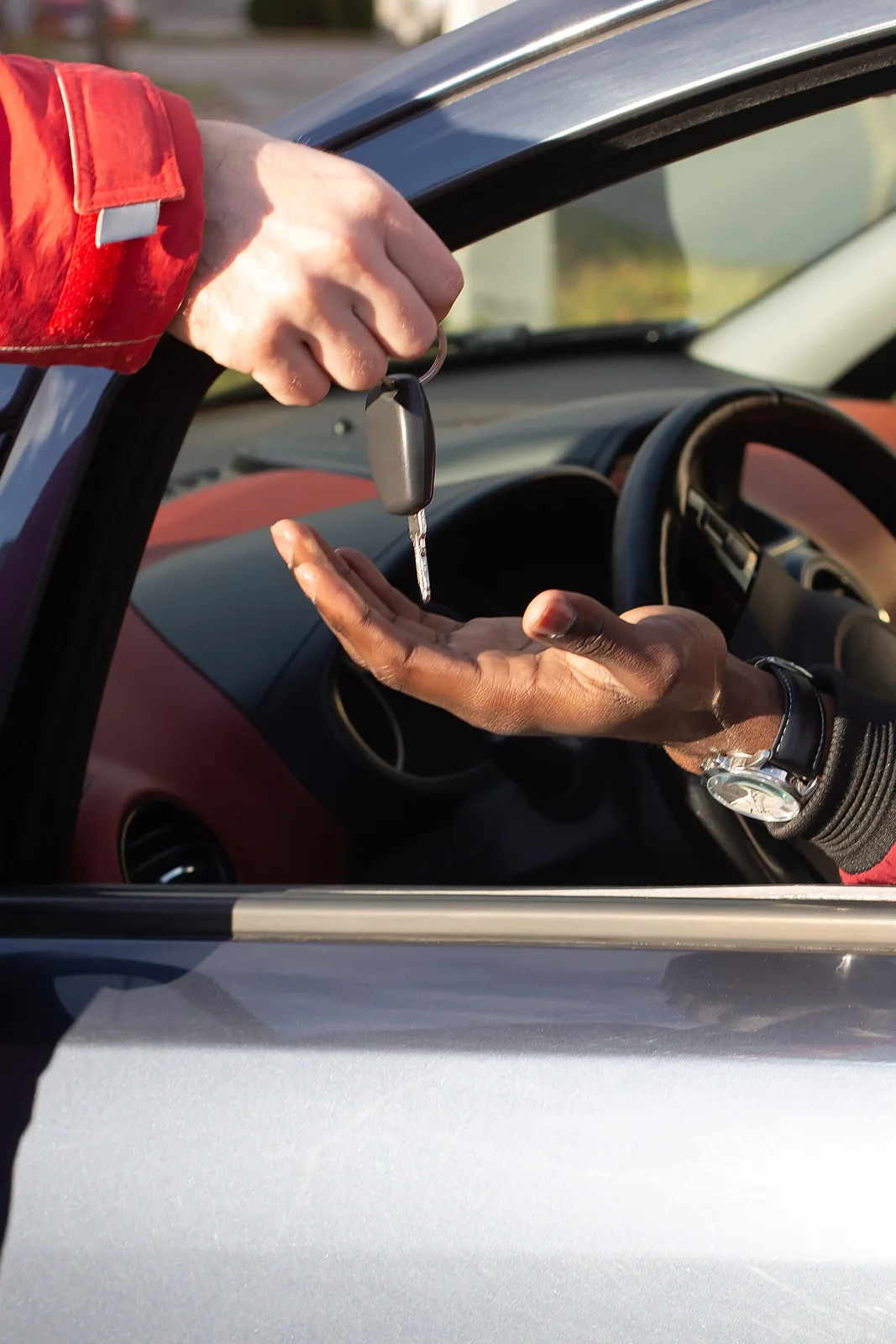
The difference between a lockout and a body-shop visit is which tools showed up. Here is what a properly equipped St. Paul unit carries.
Inflatable wedge, coated reach rod
Standard non-destructive entry on most vehicles. The wedge opens a controlled gap; the rod does the work without contacting the airbag or the wiring loom.
Make-specific decoding picks
Cylinder-level entry, and the tool that can also decode the cut so a key can be originated without pulling a lock apart.
Edge-cut and laser/sidewinder capable
Any key origination. Laser-cut blanks used by most European and late-model vehicles cannot be produced on a standard edge machine.
OBD programming, immobilizer pairing
Every chipped key and fob. Cutting alone produces a key that turns the cylinder and never starts the engine.
Push-to-start pairing, PIN retrieval
Keyless-entry vehicles. Several makes enforce a security delay, which is why these appointments are scheduled with a longer window.
VIN-based code lookup under credentialed access
All-keys-lost. Retrieving a factory code requires credentialed access and proof of ownership — the safeguard that stops this from being a theft service.
Broken-key extractors, cylinder tools
Snapped blades and seized cylinders, before any new key is cut.
Common domestic, import, and heavy-truck blanks
Carried so the job finishes on the first visit. A dispatcher confirming your year, make, and model is checking stock, not stalling.
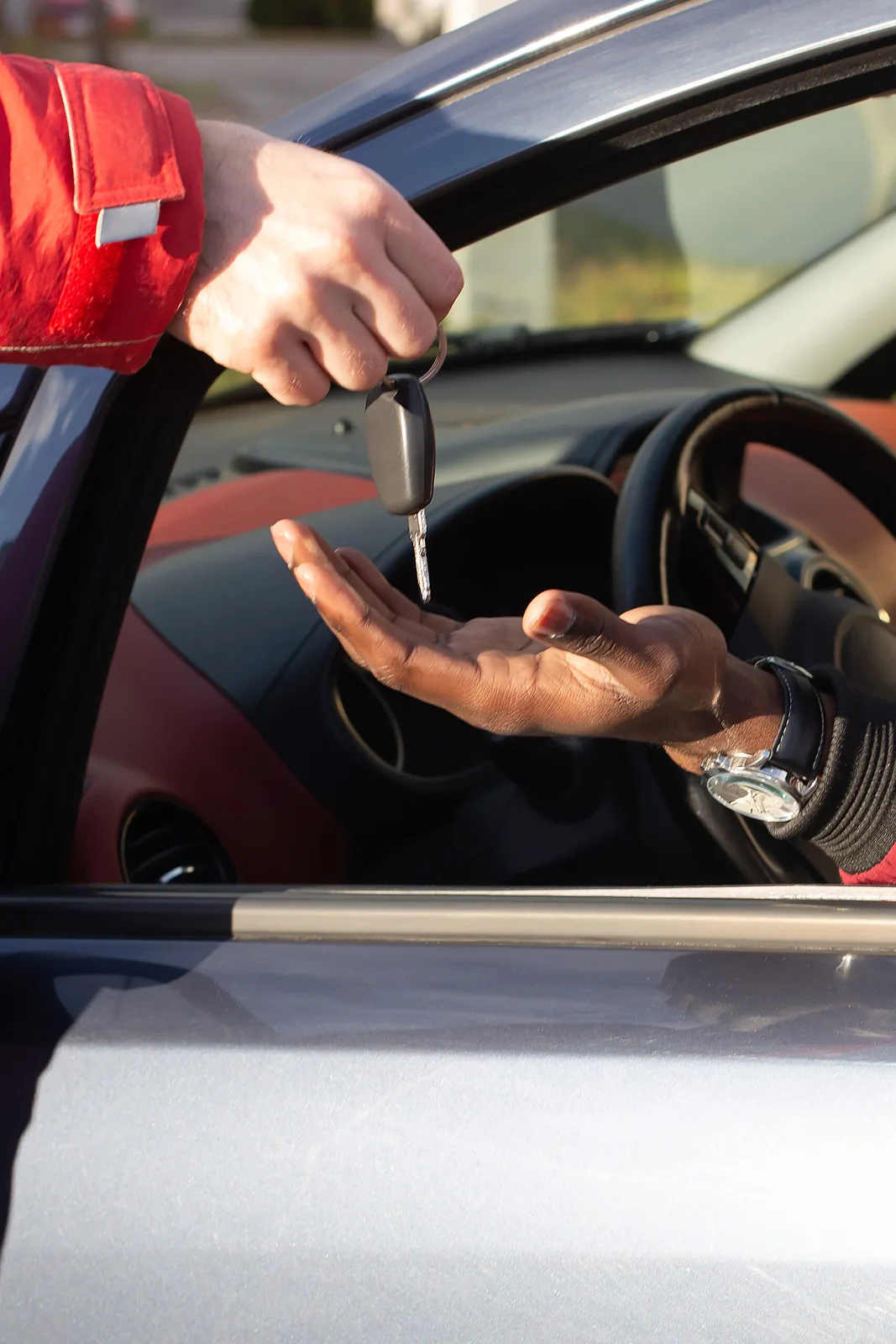
One call puts a lockout service unit on the road to you anywhere in St. Paul and the surrounding Ramsey County. Tell us where you are stopped and we do the rest.
Getting you back into the vehicle, and getting you a key that works. Non-destructive entry, cut-and-program key replacement, and all-keys-lost across the St. Paul metro.
Non-destructive entry with a wedge and long-reach tool, or picked at the cylinder. Most St. Paul lockouts open in under ten minutes without touching the paint, the glass, or the weatherstrip.
Call 911 first, then us. This is dispatched at top priority in St. Paul and no operator will slow-walk it — but on a hot day emergency services can break glass immediately, and that is the correct trade.
Class 8 cab doors use different linkage geometry than a car and the tools are not interchangeable. A St. Paul operator who only does cars will damage a Freightliner door panel finding that out.
Common on reefers, service trucks, and anything left idling. Dispatched urgently across St. Paul — it is burning fuel, it is a theft target, and on some vehicles the doors auto-lock again.
Trunk-only lockouts, jammed hatches, and box-truck rollup doors, including vehicles with no cabin pass-through. Often the St. Paul call where the keys are visibly inside the trunk itself.
Iced cylinders, worn wafers, and a key that turns without releasing. St. Paul winter mornings generate a run of these, and forcing the key is how it snaps off inside.
A modern key is a cut blade plus a chip the car has to recognize. Cutting alone gets you a key that turns and an engine that will not start — both halves happen on the St. Paul truck.
Remote lock, unlock, panic, and remote start paired to the vehicle through the diagnostic port. Far cheaper than the St. Paul dealer for the identical result on most makes.
Smart keys for keyless-entry vehicles, programmed on site. Some makes require an extended security wait before a new key takes, so a St. Paul appointment can run longer than the work itself.
No working key at all. The key code is pulled by VIN with proof of ownership, a key is originated, and the immobilizer is programmed — the St. Paul job that most people assume requires a tow to the dealer and does not.
Cutting and programming a second key while you still have a working one. Dramatically cheaper than all-keys-lost, which is the same job done under pressure in a St. Paul parking lot at midnight.
Sidewinder and internal-cut blades used by most European and late-model makes. Requires a different machine than a standard edge cut, so St. Paul dispatch confirms the blank before rolling.
Keyed-alike sets, numbered spares, and a documented code record so a lost key on a St. Paul fleet vehicle is a fifteen-minute problem instead of a day out of service.
Cut, drilled, or picked when the key is gone, and replaced with a fresh keyed set. Standard on a St. Paul drop-and-hook where the trailer came with a lock and no key.
Refrigeration units and toolbox compartments locked with product inside. Time-sensitive across St. Paul for the same reason any reefer call is — the cargo is on a clock.
Roll-up latches and cargo-door cylinders opened and rekeyed. Common on St. Paul delivery fleets where the cargo door key and the cab key were never the same key.
A worn or seized ignition that eats keys and will not turn. Repaired or replaced and rekeyed to your existing key so a St. Paul driver does not end up carrying two.
New cylinders or reprogrammed immobilizer after a break-in or a driver departure, which invalidates the old key. The step St. Paul fleets skip and then wonder how the vehicle moved.
A snapped blade pulled from the cylinder with extraction tools, then a replacement cut. A St. Paul key that broke because the cylinder is worn will break the new one too, so the cylinder gets checked.
Door and ignition cylinders replaced after a punch, a pry, or a failed entry attempt. Frequently the St. Paul call that follows someone trying a coat hanger first.
Modern doors carry side-curtain airbag components and electrical looms inside the panel. This is why an amateur St. Paul entry can turn a lockout into a four-figure repair.
A key that works sometimes is a key about to fail. Cut fresh to the factory code rather than copied from the worn one — a St. Paul copy of a copy drifts further out of spec each time.
Diagnosed on site. Most St. Paul "my fob stopped working" calls are a battery and a hidden mechanical blade, which costs almost nothing and takes two minutes.
Doors, locks, and glass verified working before we leave, so a St. Paul vehicle opened at 2 a.m. is not left with a latch that no longer secures.
An entry and a key are two different jobs at two very different prices. Here is how a St. Paul invoice breaks down, and where the dealer comparison actually lands.
Getting a technician to you and opening the vehicle. On a straightforward lockout this is often the entire bill.
Overnight and holiday calls price above daytime. Lockouts are disproportionately overnight, so ask which rate applies when you call.
Distance beyond the core service area. Confirm whether it counts from their base or from your location.
The physical key. A basic edge-cut blank is inexpensive; a laser-cut high-security blank is not.
Pairing the chip to the immobilizer, billed separately from cutting. Two steps, two charges — a quote naming only one is incomplete.
Smart keys and remote fobs are the expensive part and vary enormously by make. This is where the dealer comparison is usually most favorable to a mobile locksmith.
No working key means originating from the code rather than duplicating. More time, more tooling, and a higher price than a spare cut while you still have one.
Not a charge, but a hard requirement — ID plus registration or title. An operator who skips it is a problem for the next owner of your vehicle.
Some makes require dealer-only tooling or a security waiting period. A good operator tells you that on the phone rather than after arriving.
Broken key removal and worn cylinder replacement are labor beyond the key itself.
Priced per cylinder. After a theft, doing the ignition and skipping the doors is a half-measure worth understanding before you buy it.
A child or pet locked inside is treated as an emergency, not a revenue event. Call 911 first — always.
Road Rescue Network does not set a member operator's rates. What the network does is get the entry, the blank, and the programming quoted as separate lines before the tech rolls — the three-part breakdown a dealer quote never gives you.
The same crews that run St. Paul also cover Minneapolis (8 mi), Bloomington (12 mi) and Roseville (10 mi), so a call from either side of Ramsey County reaches the same desk.
Each service links to local response times, rescuer coverage, and recent dispatched jobs in this metro.
Patterns observed across recent dispatch data in this metro, by service type and corridor.
February 0600, I-494 eastbound approaching the airport split: light snow overnight turned to glazed ice. A loaded flatbed with 3M equipment hits the ice, trailer breaks loose, blocks all lanes. RRN dispatches heavy-duty tow to the nearest exit (Nicollette Avenue) while traffic backs up 4 miles. Road Rescue coordinates with Minnesota State Patrol for lane closure and works the recovery while secondary breakdowns spike across the network.
June midday, US 52 southbound near downtown: refrigerated trailer (frozen foods, dairy) loses compressor drive belt. Temperature climb inside unit threatens $40K cargo. RRN mobile tech reaches the breakdown in 22 minutes with spare belt inventory from Blaine Brothers. Repair takes 18 minutes. Driver continues to distribution center in Lakeville without spoilage loss.
October 1700, I-35E northbound in downtown St. Paul: tandem tractor runs loss of air brakes while merging from 35E to I-94 eastbound interchange. Driver safely pulls onto shoulder. RRN arrives 12 minutes later, diagnoses failed compressor, sources replacement from Universal Truck Parts (Roseville), and completes air brake service roadside in 45 minutes.
April morning, I-494 near Murphy Logistics Fridley facility: heavy goods carrier develops sidewall damage on drive axle tire. Driver limps to nearby exit. RRN mobile tire service arrives with load-rated tire inventory, changes all drive axle tires on-site in 35 minutes. Load continues to warehouse without downtime.
May afternoon, Stone Arch Bridge crossing on US 52: cement truck develops hydraulic line rupture crossing the Mississippi. Driver pulls to designated shoulder. RRN hydraulic specialist arrives in 28 minutes, sections failed hose, installs backup line rated for next segment. Truck clears bridge within 55 minutes to prevent rush-hour cascade failure.
November 0400, I-494 westbound near airport: Amazon freight unit reports engine knock, suspects mechanical timing issue. RRN engine diagnostics unit arrives in 19 minutes, runs full scan, identifies valve wear. Quick valve adjustment restores operation for remaining segment to regional hub. Peak-season delivery timeline maintained.
A locksmith opening a vehicle is doing the same physical act as a thief, separated only by verification. Here is what that means in St. Paul, Minnesota.
A legitimate operator will ask for photo ID and registration, title, or comparable proof before opening a vehicle or cutting a key, and will document it. Anyone who does not ask is telling you what they would do for the next person who calls about your car.
Factory key codes are not public. Access runs through a credentialed vehicle-security registry that vets locksmiths, which is the safeguard that keeps all-keys-lost from being a theft service.
Some states license automotive locksmiths and require background checks; others do not regulate the trade at all. Insurance and bonding are the more universal signal — ask for both.
Professional entry does not break glass or damage the door. If an operator's first move is a punch or a slim jim on a modern vehicle, the resulting airbag or loom damage is on them.
Call 911 first. Many states grant civil immunity for forcing entry to a child or animal in danger, and heat inside a closed car rises far faster than most people expect.
Authority to open a vehicle you do not own comes from the registered owner or the fleet operator. A rental company or employer typically has to authorize the work directly.
You get a real time before anyone rolls, and the price before the work starts. No motor club runaround and no waiting on a callback.
St. Paul's freight movement follows I-94, I-35E, and I-494, with additional capacity on US 52 and US 61. Major employers like 3M (medical devices, electronics), General Mills (consumer packaged goods), U.S. Bancorp, Target logistics, and Best Buy distribution generate constant heavy-truck traffic. Weather patterns—deep freeze in winter, black ice on bridge approaches, occasional summer thunderstorms—create predictable breakdown windows. A single mechanical failure or weather incident on I-494 eastbound backing up to the airport affects retail distribution, medical supply chain, and regional trucking for hours.
Saint Paul is the capital city of the U.S. state of Minnesota and the county seat of Ramsey County. As of the 2020 census, the city had a population of 311,527, making it Minnesota's second-most populous city and the 69th-most populous in the United States. Saint Paul and neighboring Minneapolis form the core of the Twin Cities metropolitan area, the third most populous in the Midwest with around 3.7 million residents.
St. Paul sits at the heart of Minnesota's freight corridor where I-94, I-35E, and I-494 converge—the backbone of Midwest distribution. As the state capital and second-most populous city in Minnesota, St. Paul handles everything from 3M healthcare logistics to General Mills consumer goods, with daily heavy traffic crossing the Mississippi River bridges and funneling south through the Blaine Brothers Distribution hub. A breakdown on I-94 eastbound through downtown doesn't just strand one driver; it cascades across the Twin Cities network within minutes.
Winter here is relentless. November through March brings black ice on I-494's eastbound climb toward the airport, and St. Paul's crosstown routes (I-35E, US 52) become slick corridors where lightweight trailers jackknife. The 2020 census recorded 311,527 residents within city limits, but the metro area swells to 3.7 million—making congestion, weather shutdowns, and accident response times critical. Murphy Logistics runs major distribution out of both St. Paul and Fridley; when a Reefer unit breaks down on a temperature swing, you're racing against spoilage across a three-state supply chain.
RRN covers St. Paul's freight ecosystem 24/7: Blaine Brothers Parts in downtown St. Paul connects directly to repair vendors; truck stops at Pilot (Inver Grove Heights), Flying J (Northfield), and TA centers (Hudson, Rogers) feed demand into our vendor network. We staff for the predictable—mechanical breakdowns on cross-town gridlock—and the unexpected: winter pile-ups on the I-94/I-35E interchange, chemical haul incidents on US 52, and high-speed recovery near the airport corridor where Federal Express and Amazon Air operations run continuous freight.
Black ice on the eastbound climb toward the airport (MP 48-52) is the primary concern November through March. Lightweight trailers and loaded tandems both struggle on the glazed sections. RRN stations heavy-duty tow capacity strategically to respond within 28 minutes to I-494 corridor calls. Air brake and engine warm-up time are also critical; we carry spare glow plugs and heating line fittings for cold-start failures.
US 52 runs congested through downtown St. Paul, especially during rush (0700-0900 and 1600-1800). RRN mobile units stage near downtown exits and can reach most breakdowns in 22-28 minutes. Traffic congestion is factored into our dispatch algorithm; we route heavy recovery via backroads (Stone Arch Bridge, Fort Road) to minimize additional delays.
Yes. Murphy Logistics (Fridley and St. Paul facilities) moves significant refrigerated loads. RRN partners with specialized refrigeration shops and carries common compressor, condenser, and insulation repair materials. Reefer breakdowns near the I-494/Murphy hub typically resolve in 38-42 minutes, protecting temperature-sensitive goods.
Fuel delivery to stranded trucks on I-494 eastbound is coordinated with Minnesota State Patrol and airport authorities due to hazmat regulations. RRN dispatches fuel units with proper credentials to designated safe zones off the main lanes. Standard fuel calls respond in 24-28 minutes; hazmat coordination may add 8-12 minutes but ensures legal and safe delivery.
St. Paul's winter weather (heavy snow, black ice, wind) creates multi-vehicle incidents on I-94 and I-494 intersections. RRN coordinates with Minnesota State Patrol, pre-stages additional heavy-duty tow and winch recovery units on forecast high-risk days, and provides real-time dispatch updates to freight carriers. Response to pile-up scenes typically takes 18-32 minutes depending on severity and access.
Yes. Universal Truck Parts (Roseville), Blaine Brothers Parts Distribution (downtown St. Paul), and FleetPride (Roseville) are RRN-integrated suppliers. Manders Diesel (Lakeville) serves southern corridor calls. Most common replacement parts (belts, hoses, brake pads, filters) are in stock for 20-30 minute mobile repair windows; rare parts are sourced same-day via overnight courier.
RRN-certified DOT inspectors operate from staging points across the Twin Cities metro. For St. Paul area calls, inspection arrival is typically 38-45 minutes. Pre-scheduled inspections at warehouse or truck stop facilities can often be completed in under 30 minutes. We coordinate with General Mills, Target, and 3M distribution for regular fleet maintenance windows.
Yes. Amazon Air operations near the Minneapolis-St. Paul airport run 24/7 freight schedules. RRN provides priority engine diagnostics, brake system checks, and rapid reefer repairs to keep Amazon units mobile. We maintain a dedicated dispatch tier for airport-adjacent breakdowns with target response under 22 minutes to protect peak-season and time-sensitive loads.
Call RRN dispatch immediately and provide your mile marker, direction, visible symptoms, and truck configuration (tractor-trailer, tandem, etc.). I-35E downtown runs congested; dispatch will route you to safe staging area (shoulder or designated exit) and dispatch the nearest available unit. Average response is 26-34 minutes. Have your carrier account number and insurance details ready.
RRN serves the entire Twin Cities metro (Minneapolis, Ramsey, Hennepin, Carver, Scott, Washington counties) plus extended corridors: I-35E south to Lakeville, I-494 east to the Wisconsin border, US 52 south to Northfield, and US 61 north to Wyoming. Truck stops at Pilot, TA, and Flying J are fully integrated into our network. Response times increase 8-15 minutes as you move into fringe areas but remain predictable and logged.
St. Paul runs about 311,527 people and sits in Ramsey County, inside the Twin Cities Metropolitan Area. We take the call, find the closest crew that actually does this work, and tell you what it costs before anyone turns a wheel.
Coverage in surrounding cities and metros across the same network of verified rescuers.
The same verified network of providers, dispatched 24/7 across every major Minnesota metro and freight corridor.
Whether the truck is sitting in St. Paul or out toward Roseville, it is the same phone number and the same crews. One call, day or night.
Road Rescue Network is actively recruiting verified lockout service providers in the St. Paul metro. Heavy traffic, real fleet leads, no auction race-to-the-bottom, straight rescuer-to-customer dispatch with confirmed pricing.
We send St. Paul lockout service calls directly to verified rescuers in your service radius. Apply once. Insurance & DOT verified. Live dispatch, fleet accounts, transparent pricing, no motor-club shave-down.
Deep-dive guide on choosing the right provider, common pitfalls, and what to expect on a service call.
OpenOpen positions at our network rescuers, full-time, part-time, and 1099 contract.
OpenOn-site photos from recent calls, see the work, not just the marketing.
OpenService trucks dispatch routinely to these locations across the metro freight corridors.

Local parts houses and diesel suppliers used by network mechanics for time-critical roadside repairs.
Major shippers, distribution centers, and industrial freight nodes generating outbound and inbound truck volume.
Three steps from the call to a cleared scene. Same flow whether you call from a fleet desk or the shoulder of an interstate.
Year, make, model, and whether any working key exists. That last answer is the whole price difference — a spare cut is routine, all-keys-lost is origination. And if a child or pet is inside, call 911 before you call anyone in St. Paul.
We confirm the operator carries your blank and can program your immobilizer before dispatching, and you get entry, cutting, and programming as separate numbers. Nothing is worse than a St. Paul tech arriving without the blank.
ID and registration checked, non-destructive entry, and every new key tested in the door and the ignition. A St. Paul vehicle opened at 2 a.m. does not get left with a latch that no longer locks.
Network rescuers accept all major credit cards, fleet cards, and consumer payment apps. Confirmed at dispatch.