01
Mobile welding rig
Engine-driven welder, stick and wire, cutting torch
Landing gear, crossmembers, frame cracks, and underride guards. Structural trailer repair is welding first and mechanics second.
Need trailer repair in St. Paul? We run mobile trailer repair to the dock, the yard, or the shoulder — brakes, air lines, lights, landing gear, doors, and suspension, loaded or empty. The same trucks cover Minneapolis, Bloomington, and Roseville, so a call from outside town reaches the same people.
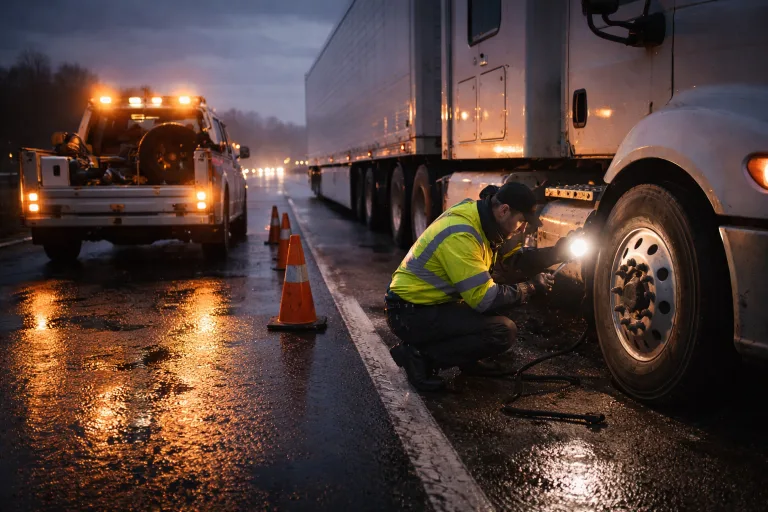
Trailer work splits between structural repair and air-brake work, and the two need completely different trucks. A St. Paul dispatch that arrives without a welder cannot fix a landing gear, and one without air tooling cannot release the brakes.
Engine-driven welder, stick and wire, cutting torch
Landing gear, crossmembers, frame cracks, and underride guards. Structural trailer repair is welding first and mechanics second.
Gauges, line stock, glad hands, fittings, caging tools
Any trailer that cannot build or hold air. Frequently a ten-minute fix that otherwise becomes a tow.
Shoe and drum service, slack gauges, pushrod travel measurement
Out-of-adjustment findings and roadside brake failures. The measured stroke is what an inspector goes by, not appearance.
Rated for loaded tandem lifting, cribbing
Bearing, hub, drum, and suspension work. A loaded trailer is lifted on rated equipment or not at all.
Trailer ABS ECU interface, sensor testing
Amber lamp faults. Guessing at a wheel speed sensor replaces good parts and leaves the lamp on.
LED lamps, harness, noseboxes, conspicuity tape
Carried on every call so a lighting violation clears on the first visit rather than becoming a return trip.
Legs, gearboxes, air bags, height valves, bushings
The high-frequency failures. Stocking them is the difference between one dispatch and three days out of service.
Hardwood sections, scuff liner, rivets, fasteners
Floor and panel damage found at a dock, where a shipper will not load until it is closed up.
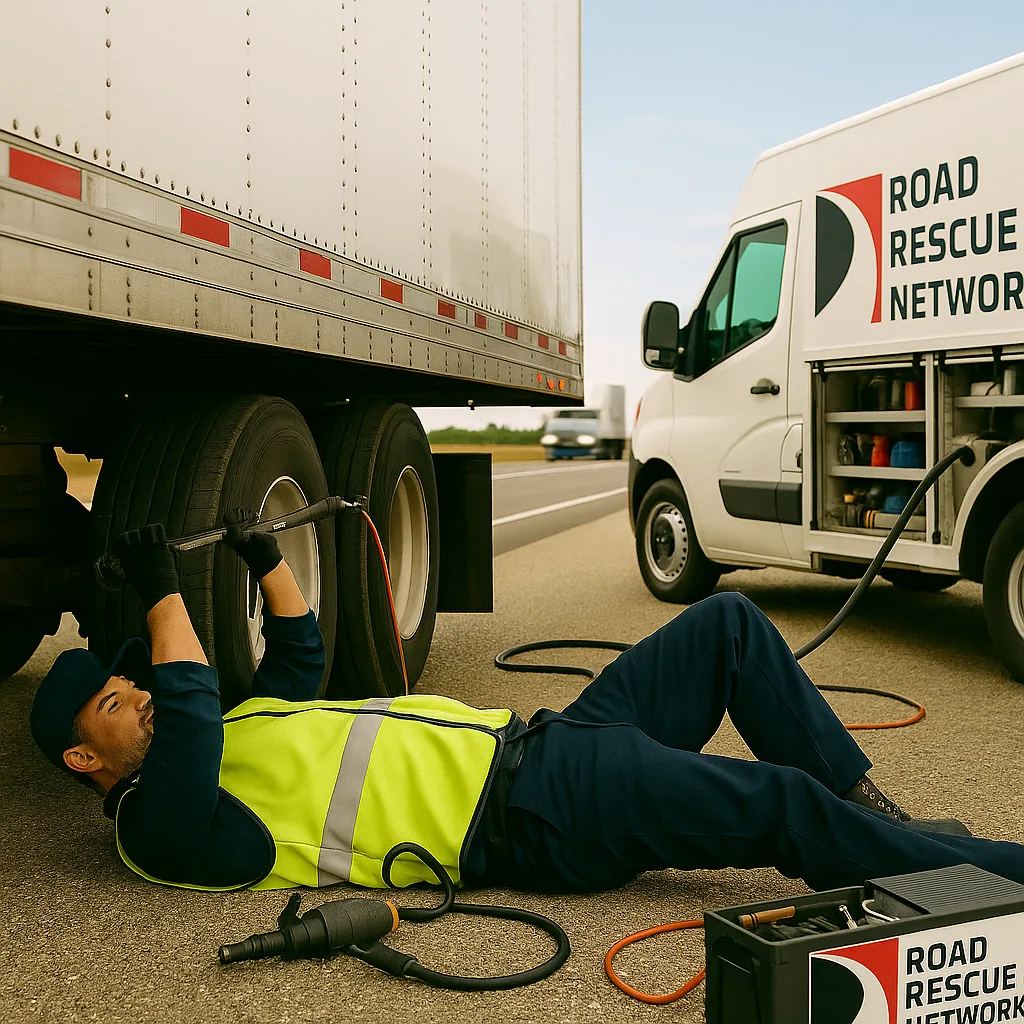
One call puts a trailer repair unit on the road to you anywhere in St. Paul and the surrounding Ramsey County. Tell us where you are stopped and we do the rest.
Van, reefer box, flatbed, tanker, dump, and container chassis worked on where the trailer sits across the St. Paul metro. A trailer failure usually strands a loaded box and a perfectly healthy tractor at the same time, which is why most of this work is mobile rather than shop.
Bent legs, stripped gearboxes, seized cranks, and sheared mounts. The single most common trailer call in St. Paul — a dropped trailer that will not lift is immobile even though nothing mechanical is actually wrong with it.
Cracked crossmembers, sagging rails, and rusted-through I-beams repaired by a certified mobile welding rig. A St. Paul trailer with failing crossmembers has a floor waiting to drop a forklift through it.
Worn kingpins, cracked upper coupler plates, and delaminated pickup plates. This is the one connection holding the trailer to the tractor, and it is an automatic out-of-service item on any St. Paul roadside inspection.
Hardwood floor sections, laminated decking, and scuff liner. Forklift damage and rot spread from a single soft board, and a St. Paul shipper can refuse to load a trailer over a hole they can see.
Torn roof sheets from dock canopies and low clearances, punctured sidewalls, popped rivets, and rub-rail damage. A wet St. Paul load is a cargo claim that costs multiples of the panel.
Swing doors, roll-up doors, cables, springs, hinges, and cam locks. A St. Paul trailer that will not close is a trailer that cannot legally or safely leave the dock, loaded or empty.
Ruptured air bags, failed height control valves, and broken shocks. A collapsed bag drops one corner onto the frame and destroys tires and bearings on the way to the next St. Paul exit.
Broken leaf springs, worn equalizers, hangers, and torque arms. St. Paul pavement joints and potholes take these apart quietly until the axle stops tracking straight.
Seized slider pins, worn rails, and air cylinders that will not release. A slider stuck in the wrong position is a St. Paul weight-distribution violation you cannot fix at the scale house.
Repacking, hub replacement, and leaking wheel seals. A hot hub found on a St. Paul shoulder is minutes from a wheel-off, which is the worst outcome on this entire list.
Bent axles and out-of-alignment tandems after a curb strike or a hard dock hit. Misalignment eats a set of St. Paul trailer tires in weeks and pulls the whole combination sideways.
Mounting, torque, valve stems, and damaged rims. Handled on the same St. Paul dispatch when a suspension failure has already taken the tire with it.
Relining, drum replacement, springs, and rollers. Brake condition is the single most cited category in St. Paul roadside inspections and the fastest route to an out-of-service sticker.
Seized S-cams and out-of-adjustment automatic slacks. A St. Paul trailer can pass a visual and still fail the pushrod-travel measurement an inspector actually takes.
Ruptured diaphragms, caged spring brakes, and cracked housings. A blown chamber locks a St. Paul trailer in place until it is caged or replaced on scene.
Chafed lines, split hoses, frozen glad hand seals, and leaking fittings. The cheapest part on the trailer and the most common reason a St. Paul driver cannot build air and leave.
Wheel speed sensors, exciter rings, ECU faults, and the amber lamp on the left rear. An inoperative ABS lamp is a documented St. Paul inspection violation on its own.
Relay valves, spring brake valves, check valves, and water-fouled tanks. Wet St. Paul winter air freezes valves closed overnight and strands a trailer that worked fine at shutdown.
Corroded pins, broken nosebox, and burned circuits. The first thing checked on any St. Paul trailer with no lights at all, and frequently the whole repair.
Chafed harnesses, corroded grounds, and splice failures inside the rail. Intermittent St. Paul lighting faults live here and are why a lamp swap did not fix it.
LED and incandescent lamp replacement across the whole required pattern. Federal rules specify which lamps must work, and a St. Paul inspector counts them.
Retroreflective tape replacement to the required pattern on sides and rear. Missing or degraded tape is a cited St. Paul violation and a genuine night-visibility problem.
Flaps, hangers, and rear impact guard repair. A damaged underride guard is a serious St. Paul finding, not cosmetic, and the weld has to be right.
The federally required annual inspection performed on site, with the failing items repaired on the same St. Paul visit rather than scheduling the trailer back into a shop twice.
Google shows a "how much would it cost to fix a trailer" box on this search because nobody on page one answers it. Here is what actually makes up a St. Paul trailer invoice, and which items move it the most.
Getting a stocked truck and a technician to where the trailer sits. Billed once and separate from labor. A shop visit removes this line but adds a tow and the days the trailer is gone.
The largest line on most trailer invoices. Structural and welding labor prices above general mechanical labor because of the certification and the rig.
Landing gear, crossmembers, and frame work are billed on the welding rig's time. Often the entire repair, with parts as a rounding error.
Air bags, slacks, chambers, lamps, and bearings are inexpensive and usually stocked. Landing gear assemblies, axles, and suspension components are not.
An adjustment is minutes. A full reline with drums across a tandem is a different invoice entirely — and the inspection that triggered it does not care which one you were expecting.
Trailer failures cluster at night and at docks on weekends. Emergency dispatch carries a premium tier, and a loaded trailer usually justifies it.
A loaded trailer limits what can be lifted, unhooked, or moved. Some repairs genuinely cannot start until the load comes off, which is a scheduling cost more than a parts cost.
A shoulder on an interstate, a fenced yard, or a dock door are three different jobs. Traffic control on a live roadway adds real cost and is not optional.
The federally required annual, and any repairs the inspection turns up. Cheapest when scheduled, most expensive when an officer finds it first.
A trailer placed out of service cannot legally move until the defect is corrected. That converts an ordinary repair into an emergency dispatch with a driver and a load waiting on it.
Frequently bundled, because the suspension or bearing failure that stranded the trailer already destroyed a tire on the way.
Chasing an intermittent electrical fault or an ABS code is billed time. It is also the difference between fixing it once and replacing three good parts.
Road Rescue Network does not set a member operator's rates. What the network does is make sure the truck that rolls to a trailer actually carries what the failure needs — a welding rig for structural work, air and brake tooling for a brake failure — instead of arriving, diagnosing, and leaving to come back.
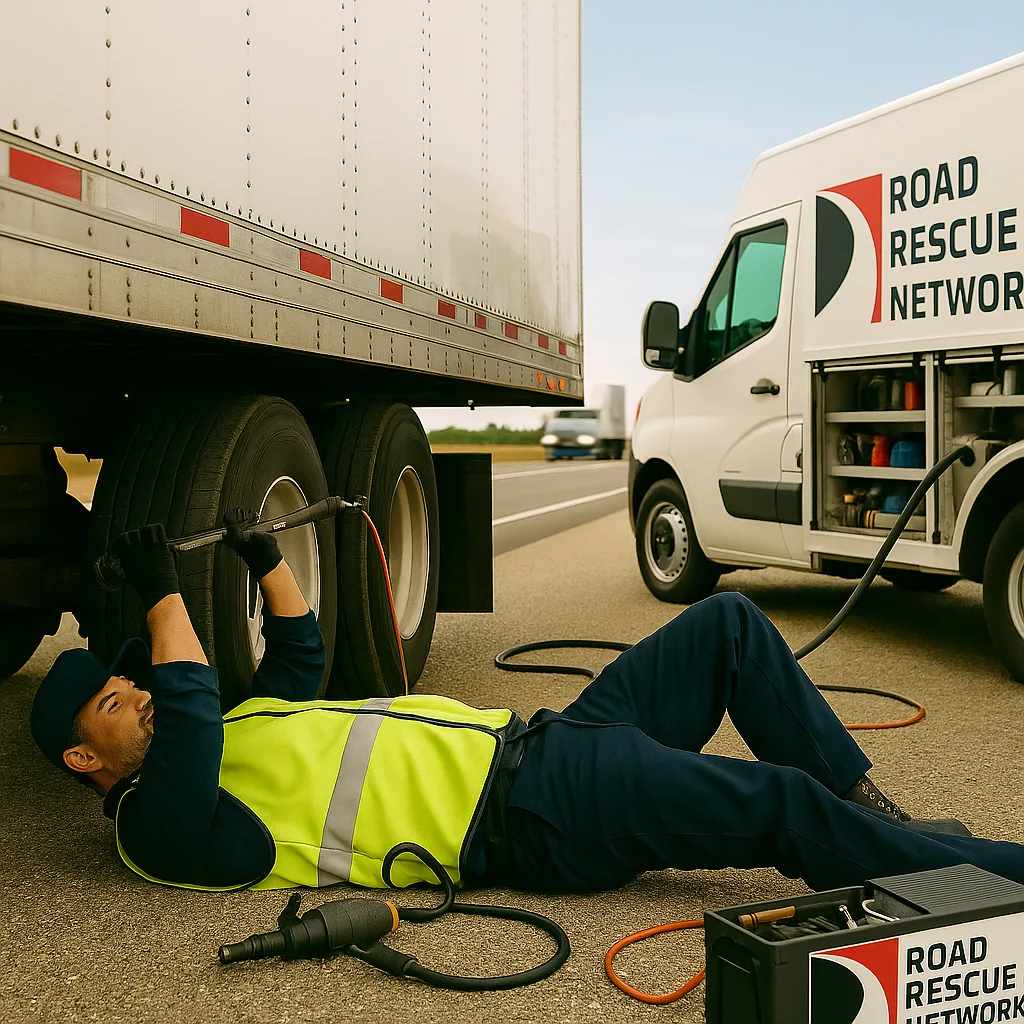
The same crews that run St. Paul also cover Minneapolis (8 mi), Bloomington (12 mi) and Roseville (10 mi), so a call from either side of Ramsey County reaches the same desk.
Each service links to local response times, rescuer coverage, and recent dispatched jobs in this metro.
Patterns observed across recent dispatch data in this metro, by service type and corridor.
February 0600, I-494 eastbound approaching the airport split: light snow overnight turned to glazed ice. A loaded flatbed with 3M equipment hits the ice, trailer breaks loose, blocks all lanes. RRN dispatches heavy-duty tow to the nearest exit (Nicollette Avenue) while traffic backs up 4 miles. Road Rescue coordinates with Minnesota State Patrol for lane closure and works the recovery while secondary breakdowns spike across the network.
June midday, US 52 southbound near downtown: refrigerated trailer (frozen foods, dairy) loses compressor drive belt. Temperature climb inside unit threatens $40K cargo. RRN mobile tech reaches the breakdown in 22 minutes with spare belt inventory from Blaine Brothers. Repair takes 18 minutes. Driver continues to distribution center in Lakeville without spoilage loss.
October 1700, I-35E northbound in downtown St. Paul: tandem tractor runs loss of air brakes while merging from 35E to I-94 eastbound interchange. Driver safely pulls onto shoulder. RRN arrives 12 minutes later, diagnoses failed compressor, sources replacement from Universal Truck Parts (Roseville), and completes air brake service roadside in 45 minutes.
April morning, I-494 near Murphy Logistics Fridley facility: heavy goods carrier develops sidewall damage on drive axle tire. Driver limps to nearby exit. RRN mobile tire service arrives with load-rated tire inventory, changes all drive axle tires on-site in 35 minutes. Load continues to warehouse without downtime.
May afternoon, Stone Arch Bridge crossing on US 52: cement truck develops hydraulic line rupture crossing the Mississippi. Driver pulls to designated shoulder. RRN hydraulic specialist arrives in 28 minutes, sections failed hose, installs backup line rated for next segment. Truck clears bridge within 55 minutes to prevent rush-hour cascade failure.
November 0400, I-494 westbound near airport: Amazon freight unit reports engine knock, suspects mechanical timing issue. RRN engine diagnostics unit arrives in 19 minutes, runs full scan, identifies valve wear. Quick valve adjustment restores operation for remaining segment to regional hub. Peak-season delivery timeline maintained.
More trailers are placed out of service for brakes, lights, and structure than for anything else. What governs a commercial trailer in St. Paul, Minnesota, and what an inspector is actually measuring.
Every commercial trailer must pass a documented periodic inspection at least once every 12 months against the federal minimum standards, and the record has to be retained. The inspection covers brakes, coupling, frame, lighting, suspension, tires, and wheels — it is not a formality, and a missing record is its own violation.
Roadside inspections are scored against the CVSA out-of-service criteria. Certain defects — a cracked upper coupler, a defective brake beyond the allowed count on an axle, an inoperative required lamp pattern — stop the trailer where it stands until repaired. That is why a trailer repair call is frequently an emergency call.
Federal rules set maximum pushrod stroke by chamber size, and an inspector measures it rather than judging by feel. A trailer with too many defective brakes on an axle is out of service regardless of how it drives, and automatic slack adjusters do not exempt anything from the measurement.
Federal regulations specify exactly which lamps and reflectors a trailer must carry and where retroreflective tape must run. Degraded or missing conspicuity tape is a routine citation, and it is also the single cheapest night-visibility improvement on the equipment.
Trailers must carry a rear impact guard meeting federal strength and labeling standards. Damage to the guard is treated as a structural defect, and a repair weld has to restore the rated strength rather than simply close the gap.
The person performing a periodic inspection and the person doing brake work both have to meet federal qualification standards. A repair signed off by someone unqualified does not satisfy the requirement, no matter how good the work was.
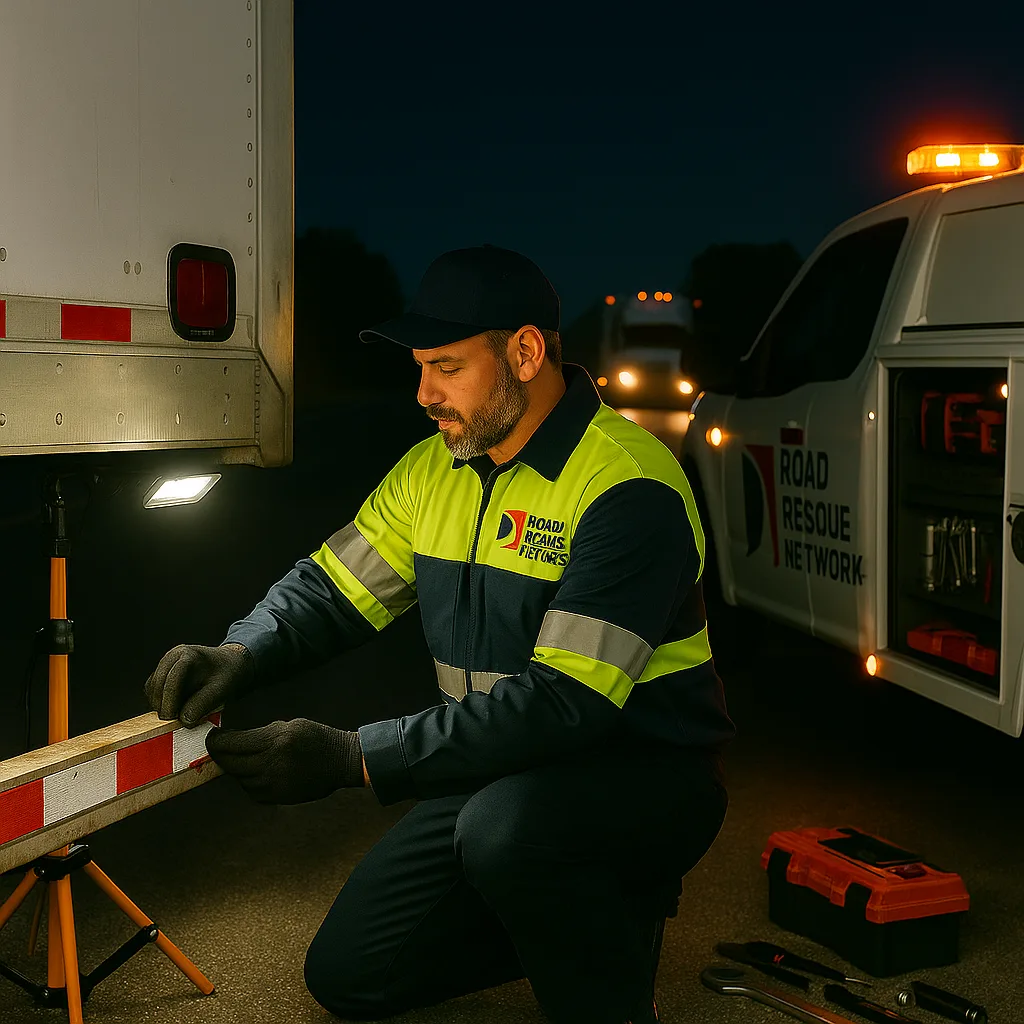
You get a real time before anyone rolls, and the price before the work starts. No motor club runaround and no waiting on a callback.
St. Paul's freight movement follows I-94, I-35E, and I-494, with additional capacity on US 52 and US 61. Major employers like 3M (medical devices, electronics), General Mills (consumer packaged goods), U.S. Bancorp, Target logistics, and Best Buy distribution generate constant heavy-truck traffic. Weather patterns—deep freeze in winter, black ice on bridge approaches, occasional summer thunderstorms—create predictable breakdown windows. A single mechanical failure or weather incident on I-494 eastbound backing up to the airport affects retail distribution, medical supply chain, and regional trucking for hours.
Saint Paul is the capital city of the U.S. state of Minnesota and the county seat of Ramsey County. As of the 2020 census, the city had a population of 311,527, making it Minnesota's second-most populous city and the 69th-most populous in the United States. Saint Paul and neighboring Minneapolis form the core of the Twin Cities metropolitan area, the third most populous in the Midwest with around 3.7 million residents.
St. Paul sits at the heart of Minnesota's freight corridor where I-94, I-35E, and I-494 converge—the backbone of Midwest distribution. As the state capital and second-most populous city in Minnesota, St. Paul handles everything from 3M healthcare logistics to General Mills consumer goods, with daily heavy traffic crossing the Mississippi River bridges and funneling south through the Blaine Brothers Distribution hub. A breakdown on I-94 eastbound through downtown doesn't just strand one driver; it cascades across the Twin Cities network within minutes.
Winter here is relentless. November through March brings black ice on I-494's eastbound climb toward the airport, and St. Paul's crosstown routes (I-35E, US 52) become slick corridors where lightweight trailers jackknife. The 2020 census recorded 311,527 residents within city limits, but the metro area swells to 3.7 million—making congestion, weather shutdowns, and accident response times critical. Murphy Logistics runs major distribution out of both St. Paul and Fridley; when a Reefer unit breaks down on a temperature swing, you're racing against spoilage across a three-state supply chain.
RRN covers St. Paul's freight ecosystem 24/7: Blaine Brothers Parts in downtown St. Paul connects directly to repair vendors; truck stops at Pilot (Inver Grove Heights), Flying J (Northfield), and TA centers (Hudson, Rogers) feed demand into our vendor network. We staff for the predictable—mechanical breakdowns on cross-town gridlock—and the unexpected: winter pile-ups on the I-94/I-35E interchange, chemical haul incidents on US 52, and high-speed recovery near the airport corridor where Federal Express and Amazon Air operations run continuous freight.
It depends far more on what failed than on the trailer. Lighting, air line, and glad hand repairs are typically the cheapest calls on the board and often finish in under an hour. Brake adjustments are quick; a full reline with drums across a tandem is a substantially larger invoice. Landing gear and crossmember work is billed on welding time and sits in between. Every St. Paul mobile call also carries a service-call charge for bringing the truck and the parts to the trailer — which is still normally less than towing the trailer to a shop and losing it for several days. Ask for the diagnosis and the repair quoted separately so you can see which is which.
It is a load-distribution guideline: put roughly 60 percent of the cargo weight in the front half of the trailer and 40 percent in the back half, so the weight sits ahead of the axles and keeps positive tongue or kingpin loading. Load it backwards and the trailer sways, and on a commercial combination it also shifts weight off the drives and onto the trailer tandems. It is a rule of thumb for stability, not a legal standard — federal axle limits and posted bridge weights are the rules that actually get enforced, and a seized slider can put you over one of them without a single pound being added.
Usually yes, and more often than owners expect. Trailers have no engine, no transmission, and no emissions system, so the expensive failure modes that retire a tractor do not exist here — a 20-year-old van trailer with a sound frame and a good upper coupler is worth repairing almost indefinitely. The honest cutoffs are structural: widespread crossmember rot, a cracked or delaminated upper coupler, or frame rail corrosion that welding cannot restore to rated strength. Brakes, lights, landing gear, suspension, and flooring are all wear items with straightforward economics. Get an honest structural assessment first, because that is the one answer that changes the decision.
Heavy-duty parts distributors across the St. Paul metro carry trailer lighting, air, brake, and suspension components, and most commercial trailer manufacturers support regional parts networks. In practice the faster route for a stranded trailer is a mobile repair truck that already stocks the high-frequency failures — lamps, harnesses, glad hands, air bags, slack adjusters, brake chambers, and landing gear components — so the repair happens on the first visit instead of turning into a parts run. Structural and floor materials are usually carried on the welding rig for the same reason.
Most of it happens on the road. Landing gear, air leaks, brake work, lighting, ABS faults, suspension components, bearings, and floor patches are all routinely done where the trailer sits in St. Paul — with a welding rig for the structural half and air tooling for the brake half. What genuinely needs a shop is major frame straightening, full floor replacement, large body and panel rebuilds, and paint. The deciding question is usually not the repair but the location: a live interstate shoulder gets stabilized and towed, while the same failure in a yard or at a dock gets fixed in place.
Brakes lead by a wide margin — defective brakes beyond the permitted count on an axle, or pushrod stroke past the limit for the chamber size, which an inspector measures rather than estimates. After that: a cracked or shifted upper coupler or worn kingpin, inoperative required lamps, tires below tread depth or with visible cord, a damaged rear impact guard, and structural cracks in frame members. An out-of-service trailer cannot legally move until the defect is corrected, which is why these turn into emergency dispatches — the driver, the tractor, and the load are all parked with it.
Black ice on the eastbound climb toward the airport (MP 48-52) is the primary concern November through March. Lightweight trailers and loaded tandems both struggle on the glazed sections. RRN stations heavy-duty tow capacity strategically to respond within 28 minutes to I-494 corridor calls. Air brake and engine warm-up time are also critical; we carry spare glow plugs and heating line fittings for cold-start failures.
US 52 runs congested through downtown St. Paul, especially during rush (0700-0900 and 1600-1800). RRN mobile units stage near downtown exits and can reach most breakdowns in 22-28 minutes. Traffic congestion is factored into our dispatch algorithm; we route heavy recovery via backroads (Stone Arch Bridge, Fort Road) to minimize additional delays.
Yes. Murphy Logistics (Fridley and St. Paul facilities) moves significant refrigerated loads. RRN partners with specialized refrigeration shops and carries common compressor, condenser, and insulation repair materials. Reefer breakdowns near the I-494/Murphy hub typically resolve in 38-42 minutes, protecting temperature-sensitive goods.
Fuel delivery to stranded trucks on I-494 eastbound is coordinated with Minnesota State Patrol and airport authorities due to hazmat regulations. RRN dispatches fuel units with proper credentials to designated safe zones off the main lanes. Standard fuel calls respond in 24-28 minutes; hazmat coordination may add 8-12 minutes but ensures legal and safe delivery.
St. Paul's winter weather (heavy snow, black ice, wind) creates multi-vehicle incidents on I-94 and I-494 intersections. RRN coordinates with Minnesota State Patrol, pre-stages additional heavy-duty tow and winch recovery units on forecast high-risk days, and provides real-time dispatch updates to freight carriers. Response to pile-up scenes typically takes 18-32 minutes depending on severity and access.
Yes. Universal Truck Parts (Roseville), Blaine Brothers Parts Distribution (downtown St. Paul), and FleetPride (Roseville) are RRN-integrated suppliers. Manders Diesel (Lakeville) serves southern corridor calls. Most common replacement parts (belts, hoses, brake pads, filters) are in stock for 20-30 minute mobile repair windows; rare parts are sourced same-day via overnight courier.
RRN-certified DOT inspectors operate from staging points across the Twin Cities metro. For St. Paul area calls, inspection arrival is typically 38-45 minutes. Pre-scheduled inspections at warehouse or truck stop facilities can often be completed in under 30 minutes. We coordinate with General Mills, Target, and 3M distribution for regular fleet maintenance windows.
Yes. Amazon Air operations near the Minneapolis-St. Paul airport run 24/7 freight schedules. RRN provides priority engine diagnostics, brake system checks, and rapid reefer repairs to keep Amazon units mobile. We maintain a dedicated dispatch tier for airport-adjacent breakdowns with target response under 22 minutes to protect peak-season and time-sensitive loads.
Call RRN dispatch immediately and provide your mile marker, direction, visible symptoms, and truck configuration (tractor-trailer, tandem, etc.). I-35E downtown runs congested; dispatch will route you to safe staging area (shoulder or designated exit) and dispatch the nearest available unit. Average response is 26-34 minutes. Have your carrier account number and insurance details ready.
RRN serves the entire Twin Cities metro (Minneapolis, Ramsey, Hennepin, Carver, Scott, Washington counties) plus extended corridors: I-35E south to Lakeville, I-494 east to the Wisconsin border, US 52 south to Northfield, and US 61 north to Wyoming. Truck stops at Pilot, TA, and Flying J are fully integrated into our network. Response times increase 8-15 minutes as you move into fringe areas but remain predictable and logged.
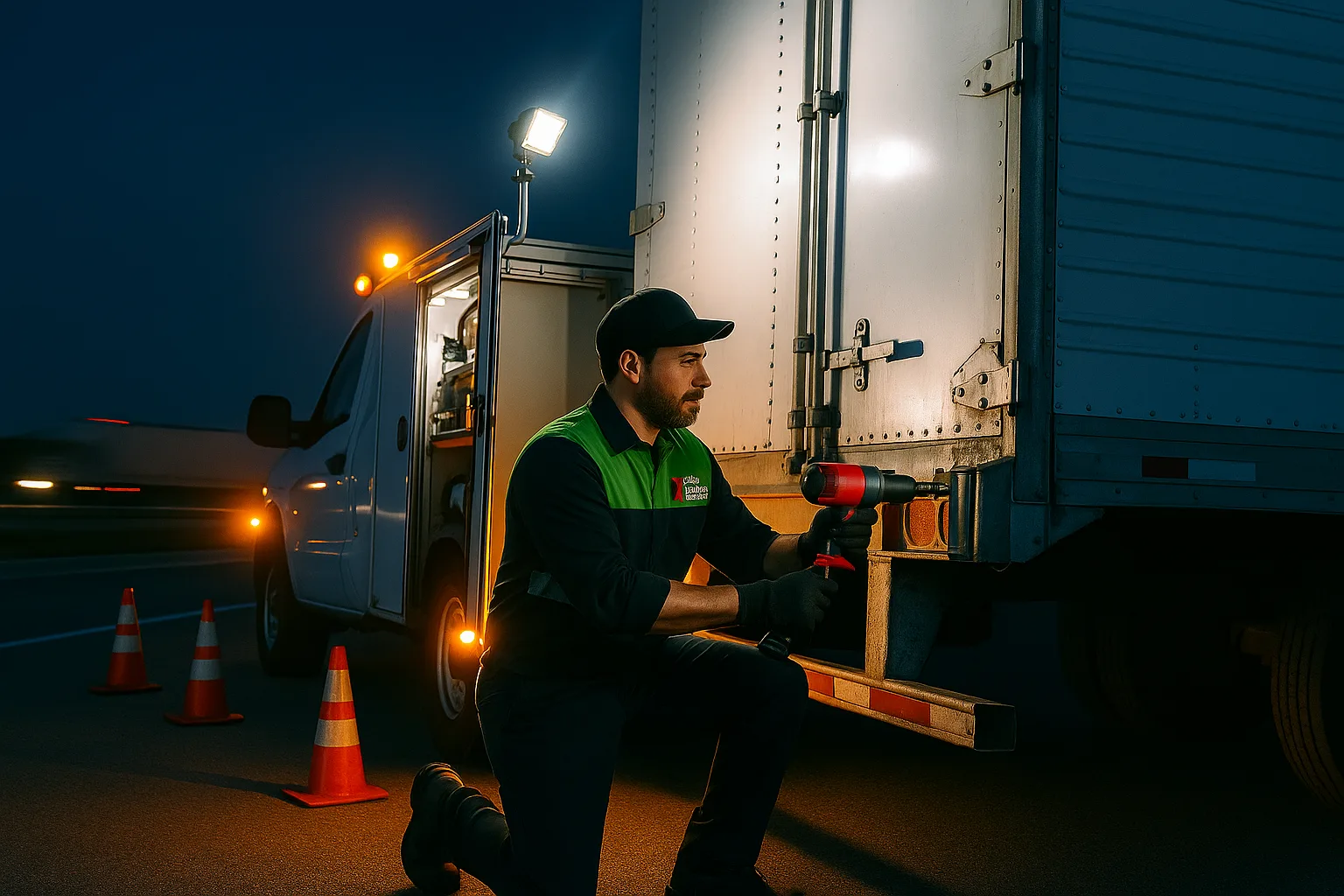
St. Paul runs about 311,527 people and sits in Ramsey County, inside the Twin Cities Metropolitan Area. We take the call, find the closest crew that actually does this work, and tell you what it costs before anyone turns a wheel.
Coverage in surrounding cities and metros across the same network of verified rescuers.
The same verified network of providers, dispatched 24/7 across every major Minnesota metro and freight corridor.
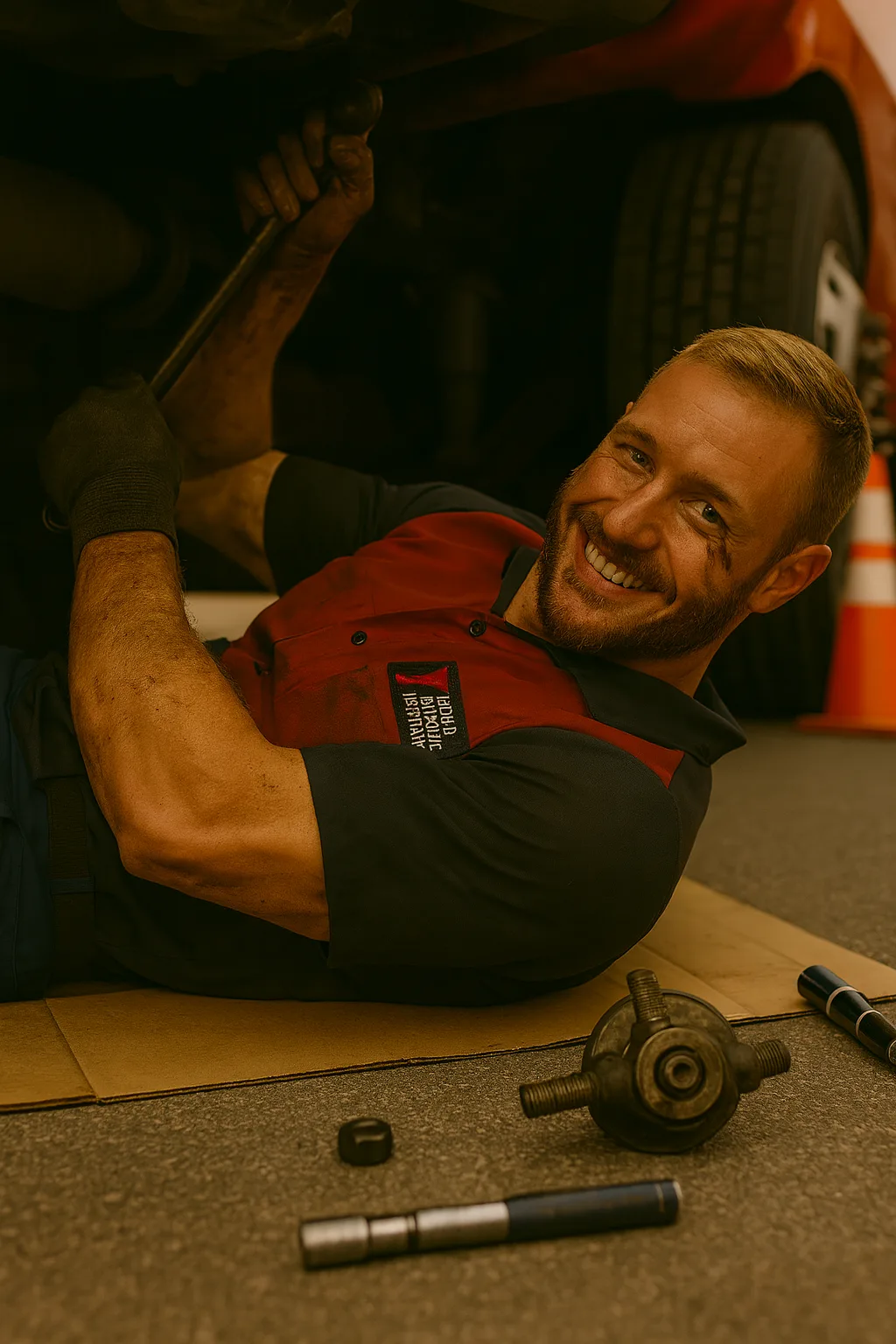
Whether the truck is sitting in St. Paul or out toward Roseville, it is the same phone number and the same crews. One call, day or night.
Road Rescue Network is actively recruiting verified trailer repair providers in the St. Paul metro. Heavy traffic, real fleet leads, no auction race-to-the-bottom, straight rescuer-to-customer dispatch with confirmed pricing.
We send St. Paul trailer repair calls directly to verified rescuers in your service radius. Apply once. Insurance & DOT verified. Live dispatch, fleet accounts, transparent pricing, no motor-club shave-down.
Deep-dive guide on choosing the right provider, common pitfalls, and what to expect on a service call.
OpenOpen positions at our network rescuers, full-time, part-time, and 1099 contract.
OpenOn-site photos from recent calls, see the work, not just the marketing.
OpenNetwork technicians carry diagnostic equipment, OEM-spec tooling, and common-failure parts for every major trailer repair brand on the road. Out-of-stock specifics order in within 24 hours.
Service trucks dispatch routinely to these locations across the metro freight corridors.


Local parts houses and diesel suppliers used by network mechanics for time-critical roadside repairs.
Major shippers, distribution centers, and industrial freight nodes generating outbound and inbound truck volume.
Three steps from the call to a cleared scene. Same flow whether you call from a fleet desk or the shoulder of an interstate.
Trailer type, what failed, and whether there is freight aboard. A landing gear, an air leak, and a wheel-off are three different trucks — sending the wrong one to a St. Paul yard costs a whole dispatch.
Structural work goes to a mobile welding rig; brake and air work goes to a truck with air tooling and brake stock. A St. Paul technician who arrives without what the failure needs has to leave and come back.
Brake stroke measured, required lamps confirmed, and any out-of-service item cleared before the trailer moves. If it cannot be made legal where it sits, we tow it in St. Paul rather than send a driver out on it.
Network rescuers accept all major credit cards, fleet cards, and consumer payment apps. Confirmed at dispatch.