01
Metered tank truck
Compartmented tank, calibrated meter, printed ticket
Bulk fills, yard fueling, and any delivery where you should be paying for measured gallons. The meter is the difference between a receipt and a guess.
Out of gas in Elwood? We run roadside assistance for gas and diesel — we bring it to wherever you stopped, enough to get you moving again. Ran a diesel completely dry? We prime it on the same visit. The same trucks cover Channahon, Joliet, and Minooka, so a call from outside town reaches the same people.
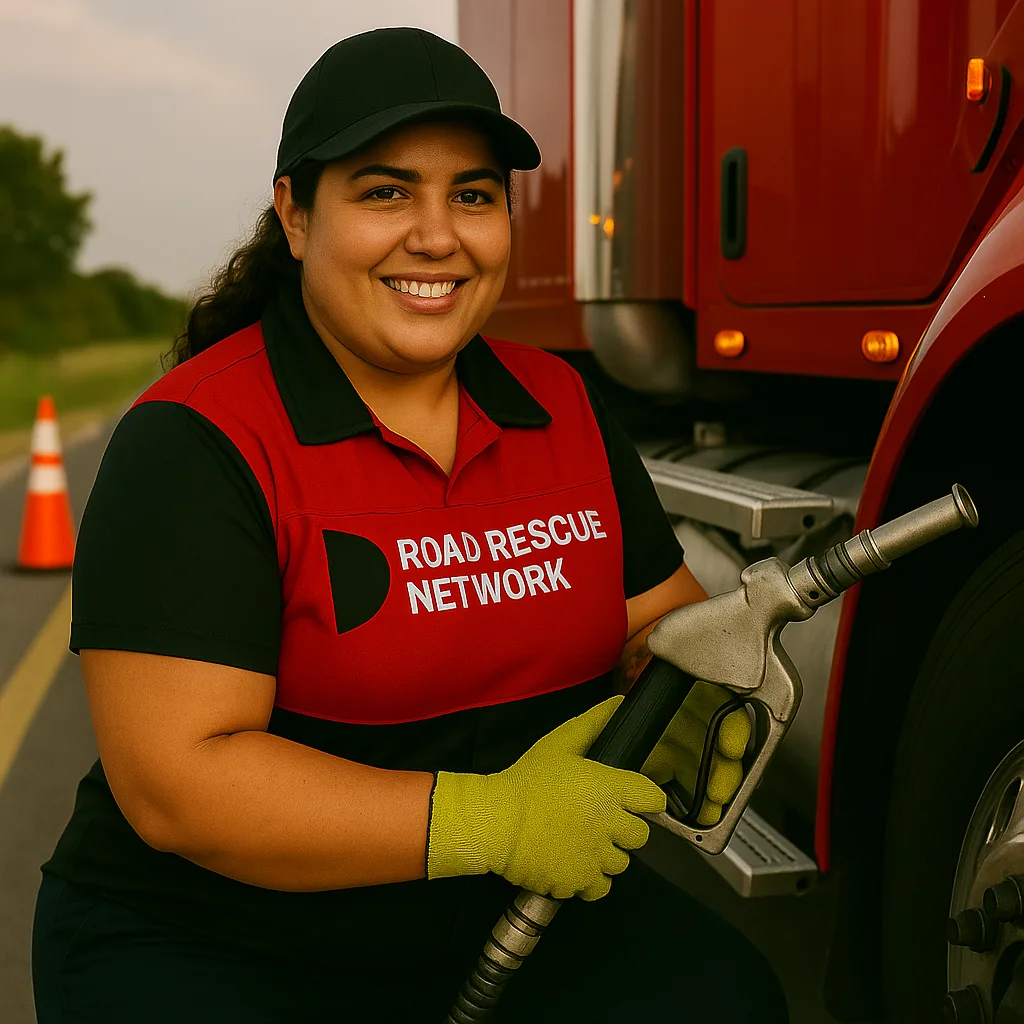
Fuel is a regulated commodity, not a jerry can in a pickup bed. This is what a compliant Elwood delivery actually rolls with.
Compartmented tank, calibrated meter, printed ticket
Bulk fills, yard fueling, and any delivery where you should be paying for measured gallons. The meter is the difference between a receipt and a guess.
DOT-approved portable containers, transfer pump, filter
Roadside out-of-fuel calls where 30 to 50 gallons ends the emergency. Faster to stage and far easier to work from a live shoulder than a tanker.
Dedicated ISO 22241 handling, no cross-contamination
Every DEF call. DEF must never touch diesel equipment — a contaminated system can take out the SCR, which is a five-figure repair.
Static bonding cable, clamps, continuity check
Every transfer, without exception. Flowing fuel generates static; bonding the truck to the receiving vehicle is what stops that from finding an ignition source.
Inline filter, water-block element
Deliveries into a tank that has been sitting, and any call following a contamination complaint. Product is filtered on the way in, not after it causes a problem.
Reversible pump, evacuation hose, holding vessel
Misfuels, contaminated tanks, and unit-to-unit transfers. Removing the wrong product is a different job than adding the right one.
Absorbent, drip pans, boom, labeled disposal
Rolls on every delivery. A small spill handled on the spot is housekeeping; the same spill reaching a storm drain is a reportable environmental event.
Anti-gel dosing, #1 blend stock, filter stock
Winter operations. A gelled truck needs treatment, blended product, and a filter change — fuel alone leaves it exactly where it sat.
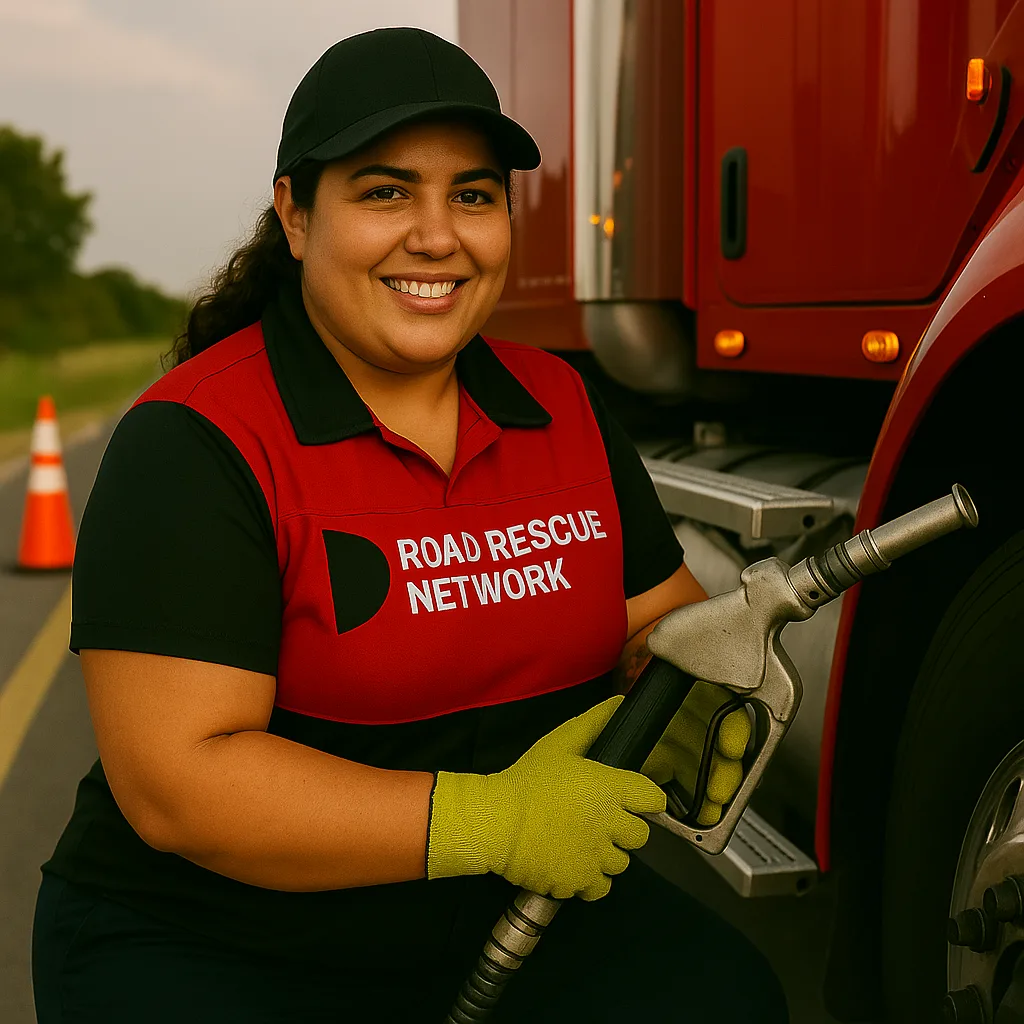
One call puts a fuel delivery unit on the road to you anywhere in Elwood and the surrounding Will County. Tell us where you are stopped and we do the rest.
Diesel, gasoline, DEF, and kerosene delivered to the shoulder, the yard, or the job site across the Elwood metro. Metered, receipted, and grounded before a drop of product moves.
Standard on-road ULSD for tractors, straight trucks, and buses. The default Elwood emergency delivery, dispensed through a metered hose so you pay for gallons pumped, not an estimate.
Red-dyed, tax-exempt diesel for generators, equipment, and construction fleets. Legal off the public road only — putting it in a truck that runs Elwood highways is a fuel-tax violation with real penalties.
Regular, mid-grade, and premium for light vehicles, service trucks, and equipment. Delivered in DOT-approved containers with the octane confirmed at order rather than guessed at the roadside in Elwood.
ISO 22241 urea solution, jugged or bulk. An empty DEF tank derates a modern engine to a crawl and eventually will not restart — a very common Elwood call that has nothing to do with the fuel tank.
Kerosene and #1 for cold-weather blending and heater fuel. Blending #1 into #2 lowers the cloud point, which is what keeps Elwood fuel flowing on a single-digit January night.
Treated winter product and anti-gel additive dosed to the temperature. Untreated summer #2 sitting overnight in a Elwood cold snap gels in the filter, and no amount of cranking fixes that.
Enough product to get you off the shoulder and to a station, or a full fill if you would rather not stop again. The most common Elwood call and usually the fastest one to clear.
A refrigeration unit runs off its own tank, and it runs dry long before the tractor does. A Elwood reefer that quits on a loaded trailer puts the cargo on a clock, so this dispatches at a different priority.
Modern common-rail engines do not simply restart once fuel is added — air has to come out of the system. The Elwood truck arrives able to bleed and prime, or you are still parked with a full tank.
Water in the fuel, algae, or a bad station load. Drain, filter change, and clean product — pouring fresh diesel on top of contaminated fuel in Elwood buys you about twenty miles.
Gas in a diesel tank or diesel in a gas tank. Do not start it. A Elwood misfuel that never turned over is a drain-and-refill; one that ran is a repair bill measured in thousands.
Refill plus the restart sequence a derated truck needs before it will make full power again. Elwood drivers frequently call this in as a breakdown because the symptom is a truck that will not exceed 5 mph.
Scheduled overnight fueling of a parked Elwood fleet, truck by truck, so drivers start the shift full instead of burning the first hour at a truck stop.
Excavators, dozers, lifts, and light towers fueled where they sit. Moving iron to a Elwood pump costs more in downtime than the fuel is worth.
Standby and prime-power generators topped during an outage or an extended run. Elwood hospitals, data rooms, and cold-storage sites schedule this before the tank gets interesting.
Surge fueling for utility crews, municipal fleets, and response equipment when Elwood stations are down or dry. Priority allocation to critical operations first.
Above-ground and skid tanks filled on a schedule or on call, metered with a printed ticket. Elwood shops and yards run this instead of a fuel card program.
Motorcoach staging, film production, and event fleets fueled on site so a Elwood schedule never bends around a fuel stop.
Primary and secondary filters swapped roadside, which is what actually gets a gelled or contaminated Elwood truck moving again after the product is replaced.
Bleeding the lines and priming the system so the engine catches. Standard on any Elwood run-dry, and the step most fuel-only providers cannot perform.
Anti-gel dosed and filters replaced when Elwood temperatures drop the fuel below its cloud point. Heat plus treatment, not simply more diesel.
Pumping out and filtering bad product from a truck or a bulk tank. Elwood yards with a tank that sat through a wet season usually need this before anything else works.
Refill, filter, and system check after a siphon or a drilled tank. A Elwood truck fueled straight after a theft frequently drags debris straight into the filter.
Pumping product from a disabled unit into a running one, metered and documented, so fuel already paid for is not stranded in a Elwood yard.
Fuel delivery is product plus service, and the two are billed separately. Here is what a Elwood invoice is actually made of.
Priced off the current market rack, not a fixed number. It moves daily, so a quote is good for that call rather than that week.
The charge for bringing the fuel to you, billed once and separate from the product. This is the number to compare between providers.
Most operators set a gallon minimum. Below it you pay the minimum anyway, so a 10-gallon splash often costs the same as 30.
Distance charges on deliveries outside the core metro. Ask where the meter starts — at their yard or at your location.
Overnight and holiday deliveries price above daytime. Most true out-of-fuel emergencies land in exactly that window.
Billed by the jug or by the gallon on its own line. It is not diesel and it is not included in a diesel price.
Getting a run-dry engine to restart is labor, not fuel. Worth confirming the truck can do it before it is dispatched.
Draining, evacuating, and disposing of bad product is billed by volume plus disposal. Substantially more than a straight delivery.
Some deliveries carry a container or pump charge. Bulk metered deliveries usually do not.
On-road diesel carries federal and state fuel tax; off-road dyed product does not. Which one you are buying changes the price and the legality.
Jumping the queue on a live shoulder or a critical generator carries a premium. Scheduled yard fueling is always the cheaper way to buy the same gallons.
Passed through at cost when containment goes beyond a routine drip pan. Rare, and cheaper than the alternative.
Road Rescue Network does not set a member operator's fuel price. What the network does is separate product from service on the quote before the truck rolls, so you can see what the gallons cost and what the delivery cost.

The same crews that run Elwood also cover Channahon (8 mi), Joliet (12 mi) and Minooka (6 mi), so a call from either side of Will County reaches the same desk.
Each service links to local response times, rescuer coverage, and recent dispatched jobs in this metro.
Patterns observed across recent dispatch data in this metro, by service type and corridor.
5:30 AM winter morning, minus-eight-degree ambient at Harbor Freight DC (Elwood). Loaded trailer from overnight freeze-check ready for 6 AM departure. Driver starts tractor; fuel lines gelled from sub-zero overnight cold. No engine cranking. RRN mobile fuel-system tech dispatches immediately (contacted by DC dispatch). Drains gelled fuel, flushes filter housing with heated solvent, installs new filter, delivers premium winter-grade diesel with anti-gel additive. Truck rolls by 6:15 AM, preserves national distribution schedule. DC postpones one backup tractor; no cascading delays.
Morning dock arrival, loaded tractor with time-sensitive shipment. Backup attempted; battery voltage collapses. RRN dispatches immediately with reserve battery. Mobile tech performs load-test, confirms battery failure (cold-rated battery too old for extreme cold). Swaps battery, cleans corrosion, applies terminal upgrade. Truck rolls within 18 minutes. Driver receives new battery recommendation; DC shifts load to backup unit if needed, minimal impact.
Heavy snow overnight, icy morning. Loaded tractor exiting Harbor Freight DC on County Road 48 hits unexpected ice, jackknifes. Trailer blocks warehouse gate access. RRN dual-unit recovery immediately mobilized. First unit chains tractor, second chains trailer. Coordinated extraction rights vehicles over 45 minutes. DC temporarily diverts outbound traffic to alternate staging area. No cargo damage; tractor towed to FleetPride (Chicago) for frame/suspension inspection. DC resumes normal outbound flow.
Truck departing Elwood on I-55 northbound toward Chicago distribution. Alternator bearing fails; no charging. Battery slowly discharges over 8 miles. Low-voltage warning lights; driver pulls to shoulder before losing all power. RRN mobile diagnostics arrives, confirms alternator failure. Loads battery to prevent stranding, coordinates controlled tow to FleetPride Chicago with priority bay. Load transferred to backup tractor at staging; on-time delivery preserved. RRN coordination prevents dock window loss.
County Road 48 to Harbor Freight DC congestion: multiple trucks queued for loading dock, stop-and-go over 2 miles. Transmission temperature climbs on one tractor. Driver notices delayed shifts; pulls aside before DC gate. RRN mobile tech checks transmission fluid (low) and cooler (salt-fouled). Top-off and cooler-line pressure test restore function. Truck advances into dock sequence; no rescheduling impact. Driver advised to schedule cooler flush and transmission service during maintenance window.
Trailer approaching Harbor Freight DC loading dock; air-brake pressure drops from 120 PSI to 75 PSI. Driver feels loss of brake response. Pulls aside on County Road 48 near warehouse. RRN air-brake tech dispatched; pressure-tests system, identifies slow leak in trailer supply line. Replaces damaged hose coupling with new assembly, recharges to spec. Pressure holds at 120 PSI. Truck resumes dock entry within 22 minutes; no load rescheduling.
Moving fuel is regulated at the federal, state, and local level all at once. What governs a delivery in Elwood, Illinois, and what a compliant operator does about it.
Fuel moved for hire is a DOT-regulated hazardous material. Above threshold quantities the vehicle must be placarded and the driver must hold a hazmat endorsement. An unmarked pickup delivering drums is not a compliant operation.
Red-dyed diesel is untaxed and legal only off the public highway. Using it in an on-road vehicle is a federal and state fuel-tax violation with per-gallon penalties, and roadside dye testing is a real enforcement activity.
Fuel flowing through a hose builds static charge. Bonding the delivery vehicle to the receiving tank before the transfer is a fundamental safety requirement, not an optional step.
Portable fuel must travel in containers approved for the purpose and secured against movement. Product carried in unapproved vessels is both a violation and the most common cause of delivery fires.
Operators handling bulk fuel work under spill-prevention obligations, and releases above a reportable quantity must be reported to environmental authorities. Containment is part of the job, not an add-on.
Metered deliveries run through devices subject to inspection and certification, which is what makes the gallon count on your ticket enforceable. Unmetered estimating is where disputes come from.
You get a real time before anyone rolls, and the price before the work starts. No motor club runaround and no waiting on a callback.
Harbor Freight DC in Elwood drives regional and national distribution logistics. The distribution center operates 24/7, routing tools, equipment, and merchandise to retail stores across the Midwest and beyond. A single tractor breakdown at the loading dock or on access roads can back up 5–10 trailers scheduled for departure, multiplying delays nationally. Peak outbound windows (early morning, 6–8 AM, and afternoon, 2–4 PM) see 40–50 trucks staging for dispatch. Winter weather during peak windows can snarl the entire operation; RRN priority dispatch during sub-zero conditions is critical to maintaining distribution schedules.
Elwood is a village in rural Will County, Illinois, United States, approximately 45 miles southwest of Chicago. The population was 2,229 at the 2020 United States census, down from 2,279 in 2010.
Elwood is a small village of 2,229 residents 45 miles southwest of Chicago, but punches far above its weight as a regional distribution hub. Harbor Freight Tools Distribution Center (3401 S Brandon Rd) anchors the area as the primary employer, staging trucks for nationwide retail distribution. While Elwood itself has limited highway presence on state mapping, the village is adjacent to I-55 access and benefits from proximity to Joliet’s I-55/I-80 interchange zone. Local roads (Township Roads, County Routes) route trucks between the distribution center and I-55 ramps, creating a consistent stream of relay traffic toward Chicago’s warehouse district and regional markets. Breakdowns at or near Harbor Freight DC create urgent scheduling impacts; a disabled trailer can delay dozens of outbound shipments across the nation.
Winter weather in Elwood follows the Chicago metropolitan pattern: December through March brings ice storms, heavy snow, and sub-zero cold. The village’s rural setting provides less urban heat-island insulation; temperatures can drop 3–5 degrees lower than downtown Chicago on clear nights. Moisture from farm ponds and small waterways accelerates frost and black-ice formation on local road surfaces near distribution facilities. Salt application on access roads is lighter than urban zones; rural roads may become icy and treacherous. Battery failures and fuel gelling are more common here due to colder ambient; trucks staging overnight in frozen conditions face mechanical challenges.
Road Rescue Network serves Elwood with priority focus on Harbor Freight DC logistics and regional warehouse operations. We maintain 24/7 mobile dispatch for local roads connecting Elwood to I-55 and Joliet corridors. Vendor partnerships include River Valley Truck Parts (Kankakee), FleetPride Chicago, and independent shops trained in rapid-response warehouse emergencies. Winter-specialty services include fuel additives, battery exchange, and roadside diagnostics calibrated for sub-zero conditions. We coordinate directly with Harbor Freight logistics to preserve dock scheduling and minimize cargo staging delays during breakdowns. Our network extends into Channahon, Minooka, and the greater Will County warehouse cluster.
Call RRN immediately and mention Harbor Freight DC Elwood. We coordinate directly with DC logistics and warehouse operations. For mobile-repairable issues (fuel, battery, air-brake diagnostics), we typically fix on-site within 20–30 minutes. For major work (transmission, engine), we arrange fast-track towing with backup tractor coordination so your load continues to national distribution. DC appreciates early notification; we can often preserve scheduling by offloading cargo to standby unit.
Yes. RRN maintains winter-grade diesel (treated with cold-flow enhancer) in mobile delivery tankers November through March. If you’re at Harbor Freight DC or anywhere in Elwood and fuel lines are gelling, call immediately. Average delivery response is 22 minutes. We can also deliver to local truck stops (Pilot Channahon, Minooka) for pre-fueling before winter hauls.
County Road 48 is rural with lighter salt maintenance than urban roads. Ice forms quickly during freeze events. Early morning (5–8 AM) is most treacherous due to overnight frost and reduced traffic to break ice. If you’re approaching the DC during freeze warnings, add 15–20 minutes to your ETA. RRN monitors County Road 48 conditions and provides emergency recovery if you jackknife or slide. Report hazards via app so we can alert other DC-bound trucks.
Absolutely. Harbor Freight DC typically has sub-zero startup challenges during January–February extremes. RRN pre-positions heated-battery reserves at staging areas near Elwood. Call with battery failure symptoms; we’ll deploy mobile tech with replacement within 18–20 minutes. Installed battery is tested under load before departure. Driver receives recommendation for battery upgrade if rated for less than 1000 CCA for your engine.
For mobile-repairable issues: 20–30 minutes (minimal impact). For major work: 2–4 hours (DC coordinates backup tractor, your load continues). RRN coordinates with DC dispatch to minimize rescheduling by offloading to standby unit or towing to priority-bay shop. Worst-case (multi-hour major repair): 6–8 hour delay, but RRN works to preserve your place in national distribution queues.
Elwood itself has no dedicated truck stop, but nearby: Pilot Travel Center (Channahon, 11 miles), Love’s (Channahon, 15 miles). Pilot Minooka (301 Ridge Rd) is 8 miles away. RRN can arrange overnight warehouse staging at Harbor Freight or nearby facilities if your load is compatible. For extended repairs, we coordinate with FleetPride Chicago or River Valley Truck Parts (Kankakee) with bay overnight staging.
Elwood doesn’t have a dedicated DOT station, but RRN coordinates inspections at Will County authorized facilities (Joliet area, 12 miles). Mobile pre-trip inspections for brake, lighting, tire, hazmat compliance average 24 minutes at Harbor Freight DC or roadside. Schedule in advance through app. For pre-departure checks at DC, we can often coordinate inspection at loading dock area.
Peak outbound (6–8 AM, 2–4 PM) creates stop-and-go queuing on County Road 48. Preventive: (1) Check transmission fluid monthly. (2) Monitor temperature gauge during dock staging. (3) Shift to neutral during extended stops. (4) Schedule cooler flush annually to remove salt/debris. If temperature climbs during staging, exit queue, cool 10 minutes, re-enter. RRN mobile diagnostics can check cooler condition roadside (28 min).
Call RRN immediately (5–30-min response). Mobile fuel-system tech will drain gelled fuel, flush filter, deliver winter-grade diesel with anti-gel. Truck typically rolls within 20–30 minutes. For future cold seasons, pre-treat all fuel loads with approved cold-flow additive and consider block heater installation. RRN can refer you to equipment vendors for engine-block heater setup.
Yes. Mobile air-brake service available on all local roads (County Road 48, I-55 access) and I-55 corridor from Elwood. Average response 30 minutes. Common issues: pressure loss from cold-weather moisture icing in compressor discharge, trailer supply-line leaks (salt corrosion), valve stiction. We carry replacement valves, hose couplings, and desiccant cartridges. Pressure-test confirms integrity before you roll.
Elwood runs about 2,229 people and sits in Will County, inside the Elwood Warehouse District (Chicago Metropolitan Extended). We take the call, find the closest crew that actually does this work, and tell you what it costs before anyone turns a wheel.
Coverage in surrounding cities and metros across the same network of verified rescuers.
The same verified network of providers, dispatched 24/7 across every major Illinois metro and freight corridor.
Whether the truck is sitting in Elwood or out toward Minooka, it is the same phone number and the same crews. One call, day or night.
Road Rescue Network is actively recruiting verified fuel delivery providers in the Elwood metro. Heavy traffic, real fleet leads, no auction race-to-the-bottom, straight rescuer-to-customer dispatch with confirmed pricing.
We send Elwood fuel delivery calls directly to verified rescuers in your service radius. Apply once. Insurance & DOT verified. Live dispatch, fleet accounts, transparent pricing, no motor-club shave-down.
Deep-dive guide on choosing the right provider, common pitfalls, and what to expect on a service call.
OpenOpen positions at our network rescuers, full-time, part-time, and 1099 contract.
OpenOn-site photos from recent calls, see the work, not just the marketing.
OpenService trucks dispatch routinely to these locations across the metro freight corridors.


Local parts houses and diesel suppliers used by network mechanics for time-critical roadside repairs.
Major shippers, distribution centers, and industrial freight nodes generating outbound and inbound truck volume.
Three steps from the call to a cleared scene. Same flow whether you call from a fleet desk or the shoulder of an interstate.
Diesel, gas, DEF, or kerosene — and roughly how much gets you moving. Whether the engine ran completely dry matters too, because a Elwood run-dry needs bleeding and priming, not just a fill.
You get the per-gallon price and the delivery charge as separate numbers before the truck leaves, plus an ETA. No Elwood delivery should end with a single lump sum you cannot break apart.
The truck is bonded to your vehicle, product is filtered on the way in, and you get a metered ticket showing gallons and price. If it needs a prime or a filter to restart, that happens before we leave you in Elwood.
Network rescuers accept all major credit cards, fleet cards, and consumer payment apps. Confirmed at dispatch.